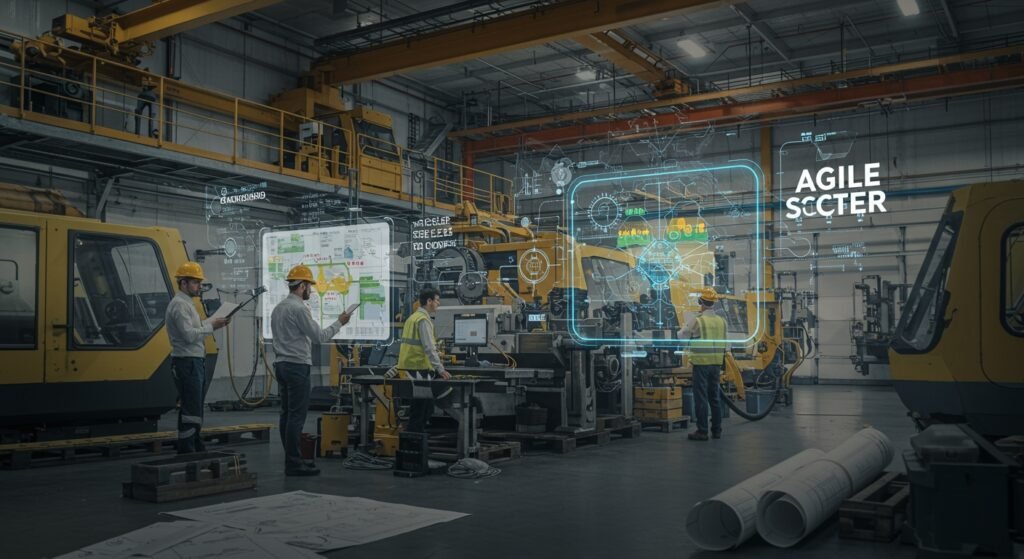
In a world of rapidly evolving technology and market demands, industrial projects, once characterized by rigid Waterfall methodologies, are increasingly adopting agile principles. The integration of Agile Practices in Industrial Projects offers a transformative approach to managing complex, large-scale endeavors, promising enhanced flexibility, quicker delivery, and improved responsiveness to change. This shift is not merely a trend but a strategic imperative for industries seeking to maintain a competitive edge and innovate more effectively.

Table of Contents
- The Rise of Agile in Industrial Projects
- Key Agile Practices for Industrial Success
- Implementing Agile: Challenges and Solutions
- Benefits of Agile Practices in Industrial Projects
- Conclusion
The Rise of Agile in Industrial Projects
Historically, industrial projects, from infrastructure development to manufacturing plant construction, have relied heavily on sequential, plan-driven methodologies. While these approaches offer predictability in stable environments, they often struggle with unforeseen changes, scope creep, and prolonged delivery cycles. The need for adaptability, faster feedback loops, and continuous value delivery has pushed industrial sectors to look beyond traditional paradigms and embrace the agility seen in software development.
Traditional vs. Agile Approaches
The fundamental difference lies in their philosophy. Traditional methods emphasize comprehensive upfront planning and fixed sequential phases. Agile, conversely, thrives on iterative cycles, continuous feedback, and adaptability. This allows for mid-course corrections, risk mitigation, and better alignment with evolving stakeholder needs, a crucial advantage when dealing with the inherent uncertainties of large-scale industrial endeavors. For more insights into traditional project management, you might find this internal guide on project management best practices helpful.
Key Agile Practices for Industrial Success
Adopting agile doesn’t mean abandoning all structure; rather, it means integrating specific practices that foster flexibility and efficiency.
Iterative Development and Sprints
Breaking down large projects into smaller, manageable iterations (sprints) is a cornerstone of agile. Each sprint delivers a tangible increment of the project, allowing teams to test, review, and refine outputs continuously. In industrial settings, this could mean developing specific modules of a plant or phases of a construction project in short, focused bursts.
Cross-functional Teams
Agile promotes self-organizing, cross-functional teams that possess all the necessary skills to complete a project increment. This minimizes dependencies, streamlines communication, and accelerates decision-making, which is vital in complex industrial environments involving diverse engineering disciplines.
Continuous Improvement and Adaptation
Regular retrospectives are a hallmark of agile, encouraging teams to reflect on what went well and what could be improved. This culture of continuous learning and adaptation ensures that processes evolve and become more efficient over time, directly benefiting the long-term success of industrial projects. Learning from industry leaders can accelerate this process. For example, understanding the principles outlined by bodies like Scrum.org can provide a solid foundation for implementation.
Stakeholder Collaboration
Agile emphasizes constant engagement with stakeholders, ensuring their feedback is incorporated throughout the project lifecycle. This collaborative approach minimizes misunderstandings, builds trust, and ensures the final output truly meets the client’s needs and specifications.
Implementing Agile: Challenges and Solutions
While the benefits are clear, transitioning to agile in industrial settings comes with unique challenges.
Overcoming Resistance
Change can be difficult, especially in organizations steeped in traditional methodologies. Successful adoption requires strong leadership buy-in, comprehensive training, and clear communication about the benefits and goals of agile transformation. Starting with pilot projects can help demonstrate success and build momentum.
Scaling Agile
Applying agile principles to massive, multi-year industrial projects requires careful planning and specialized frameworks like Scaled Agile Framework (SAFe) or Large-Scale Scrum (LeSS). These frameworks provide structure for coordinating multiple agile teams and ensuring alignment across an entire enterprise.
Benefits of Agile Practices in Industrial Projects
The adoption of Agile Practices in Industrial Projects yields a multitude of advantages, significantly impacting project outcomes and organizational capabilities. Here’s a summary of key benefits:
| Benefit Category | Description |
|---|---|
| Increased Flexibility | Ability to respond quickly to changes in requirements, market conditions, or unforeseen challenges. |
| Faster Time-to-Market/Completion | Iterative delivery accelerates the realization of value and reduces overall project duration. |
| Improved Quality | Continuous testing and feedback loops lead to higher quality outputs and fewer defects. |
| Enhanced Collaboration | Better communication and synergy among team members and stakeholders. |
| Reduced Risk | Early identification and mitigation of risks through frequent inspections and adaptations. |
| Greater Stakeholder Satisfaction | Continuous engagement ensures the final product aligns perfectly with evolving needs. |
Conclusion
The journey towards integrating Agile Practices in Industrial Projects is challenging but profoundly rewarding. By embracing iterative development, fostering cross-functional collaboration, and committing to continuous improvement, industrial organizations can navigate complexity with greater ease, deliver value more rapidly, and build a resilient foundation for future innovation. The future of industrial project management is undoubtedly agile, promising a new era of efficiency and adaptability.