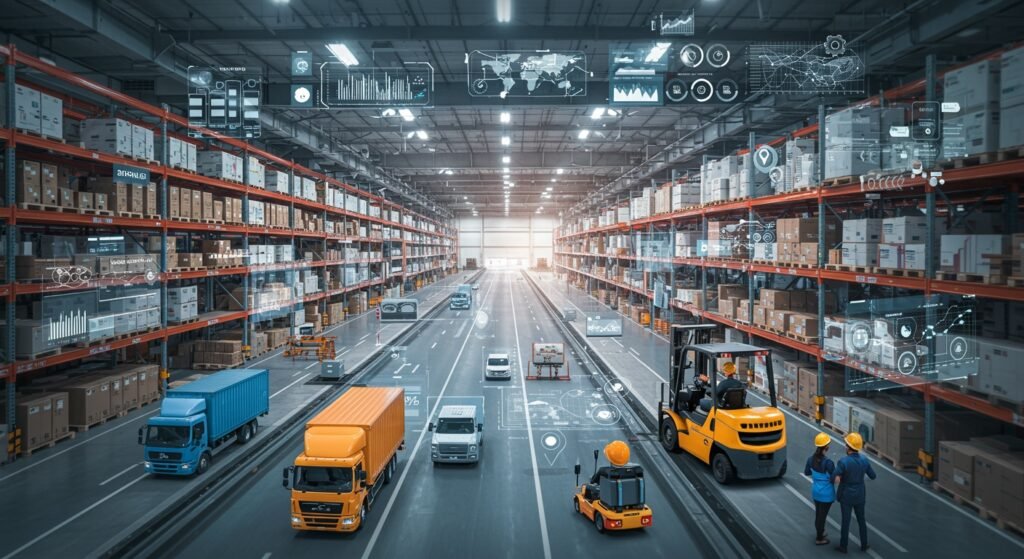
In the fast-evolving world of global commerce, the seamless flow of goods and services is paramount. This intricate dance of production, storage, and movement relies heavily on sophisticated planning and execution. At the heart of this optimization lies Industrial Engineering, a discipline dedicated to improving processes, systems, and organizations. When applied to logistics and transportation, industrial engineering transforms complex challenges into streamlined, efficient operations. This article delves into the critical role industrial engineers play in revolutionizing how products move from source to consumer, ensuring speed, cost-effectiveness, and reliability.

Table of Contents
- Introduction to Industrial Engineering in Logistics and Transportation
- The Crucial Role of Industrial Engineering in Logistics
- Industrial Engineering in Transportation Systems
- Key Benefits and Impact of Industrial Engineering
- Challenges and Future Trends
- Case Study: Industrial Optimization in Action
- Conclusion
Introduction to Industrial Engineering in Logistics and Transportation
Industrial Engineering is a branch of engineering that focuses on the optimization of complex processes, systems, or organizations. It is concerned with the development, improvement, implementation, and evaluation of integrated systems of people, money, knowledge, information, equipment, energy, and material. In the context of logistics and transportation, industrial engineers apply scientific methods and mathematical models to design, analyze, and manage supply chains, distribution networks, and transportation systems. Their primary goal is to eliminate waste, enhance productivity, improve quality, and ensure operational excellence.
The Crucial Role of Industrial Engineering in Logistics
Logistics, often described as the backbone of the supply chain, encompasses everything from inventory management and warehousing to material handling and order fulfillment. Industrial engineers bring a systematic approach to these areas, identifying bottlenecks and implementing innovative solutions.
Process Optimization and Efficiency
One of the core contributions of industrial engineering is process optimization. Engineers meticulously analyze current workflows, from inbound receiving to outbound shipping, using tools like value stream mapping and simulation. By redesigning layouts, streamlining tasks, and automating repetitive activities, they significantly reduce lead times and operational costs. This often includes implementing efficient warehouse optimization strategies that improve pick paths and storage density.
Inventory Management Strategies
Managing inventory is a delicate balance: too much ties up capital, too little risks stockouts. Industrial engineers develop sophisticated inventory control systems, forecasting models, and replenishment strategies to minimize holding costs while ensuring product availability. They leverage data analytics to predict demand patterns, optimize safety stock levels, and implement just-in-time (JIT) principles where appropriate.
Facility Layout and Design
The physical layout of a warehouse or distribution center directly impacts its efficiency. Industrial engineers design optimal facility layouts that minimize travel distances, reduce congestion, and improve material flow. This involves strategic placement of receiving docks, storage areas, picking zones, and shipping bays, often incorporating advanced material handling equipment and automation technologies.
Industrial Engineering in Transportation Systems
Transportation is the physical movement of goods, and it represents a significant portion of logistics costs. Industrial engineering plays a vital role in making these movements as efficient and economical as possible. For further reading on global logistics, you might consult leading supply chain publications.
Route Optimization and Network Design
Industrial engineers use algorithms and software to optimize transportation routes, minimizing fuel consumption, travel time, and delivery costs. This includes designing optimal delivery networks, determining the best locations for distribution hubs, and managing complex multi-modal transportation systems. Factors like traffic patterns, vehicle capacity, and delivery windows are all considered.
Fleet Management and Maintenance
Effective management of a transportation fleet is crucial. Industrial engineers apply principles to optimize fleet size, scheduling, and maintenance. They develop predictive maintenance schedules to minimize downtime, analyze vehicle performance data, and implement telematics systems to monitor driver behavior and optimize fuel efficiency.
Traffic Flow and Infrastructure
Beyond individual routes, industrial engineers contribute to the design and improvement of broader transportation infrastructure. They analyze traffic flow patterns, model congestion scenarios, and propose solutions for improving road networks, port operations, and airport logistics, aiming for smoother and faster transit of goods.
Key Benefits and Impact of Industrial Engineering
The application of industrial engineering principles in logistics and transportation yields substantial benefits. Businesses experience significant cost reductions through optimized resource utilization and waste elimination. Efficiency gains lead to faster delivery times and improved customer satisfaction. Moreover, better planning contributes to enhanced safety, reduced environmental impact through optimized fuel use, and greater resilience in supply chain operations. It allows companies to stay competitive in a global market by consistently delivering value.
Challenges and Future Trends
While industrial engineering offers immense advantages, challenges remain, including managing data complexity, integrating new technologies, and adapting to global disruptions. The future of industrial engineering in logistics and transportation will be heavily influenced by emerging technologies. Artificial intelligence (AI), machine learning (ML), big data analytics, blockchain, and the Internet of Things (IoT) are poised to further revolutionize optimization efforts. AI-powered forecasting, autonomous vehicles, and smart warehouses will enable unprecedented levels of efficiency and responsiveness, making the role of the industrial engineer even more critical in designing these advanced systems.
Case Study: Industrial Optimization in Action
Consider a large e-commerce company that implemented industrial engineering principles to overhaul its distribution network. The focus was on improving warehouse throughput and reducing delivery times. Here’s a summary of the impact:
| Metric | Before IE Intervention | After IE Intervention | Improvement |
|---|---|---|---|
| Warehouse Throughput | 1,000 units/day | 1,300 units/day | 30% |
| Average Delivery Time | 48 hours | 36 hours | 25% |
| Fuel Consumption (per unit) | 0.5 L | 0.4 L | 20% |
| Inventory Holding Cost | $50,000/month | $40,000/month | 20% |
Conclusion
Industrial engineering is indispensable for creating robust, efficient, and sustainable logistics and transportation systems. By continuously seeking to optimize processes, manage resources effectively, and leverage technological advancements, industrial engineers ensure that goods move seamlessly across the globe. Their analytical prowess and problem-solving skills are not just about saving costs; they are about building the future of supply chains, enhancing global trade, and ultimately contributing to a more connected and efficient world. The demand for these specialized skills will only grow as industries strive for operational excellence.