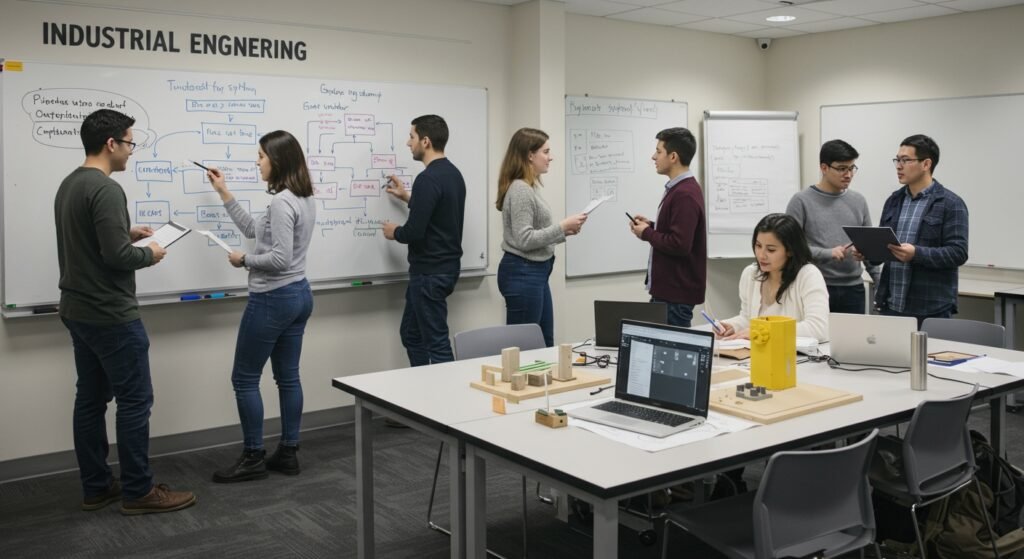
In an increasingly complex global economy, the demand for efficiency, productivity, and innovation has never been higher. This is where Industrial Engineering plays a pivotal role, transforming how organizations operate across sectors. Industrial Engineering in education and training equips future professionals with the analytical tools and systemic thinking needed to optimize processes, improve quality, and reduce waste. Understanding its core principles and applications is not just beneficial, but essential for anyone looking to make a significant impact in today’s competitive landscape.
Table of Contents
- What is Industrial Engineering?
- The Importance of Industrial Engineering in Modern Education
- Key Components of Industrial Engineering Training Programs
- Impact on Workforce Development and Industry
- Conclusion
What is Industrial Engineering?
Industrial Engineering (IE) is a branch of engineering that deals with the optimization of complex processes, systems, or organizations. IE professionals work to eliminate waste of time, money, materials, energy, and other resources. Unlike other engineering disciplines that focus on designing products or structures, IE focuses on improving the processes that make and deliver those products or services. This encompasses a broad range of activities, from manufacturing and supply chain management to healthcare delivery and service operations. The goal is always to achieve maximum efficiency, productivity, and quality.
The Importance of Industrial Engineering in Modern Education
The curriculum of an Industrial Engineering program is designed to foster a unique blend of technical expertise and managerial acumen. It goes beyond mere theoretical knowledge, emphasizing practical applications and real-world problem-solving, making it invaluable for preparing students for the challenges of various industries.
Developing Critical Thinking and Problem-Solving Skills
At its core, Industrial Engineering education is about teaching students how to think systematically. They learn to break down complex problems, identify root causes, and design innovative solutions. This involves applying mathematical modeling, statistical analysis, and simulation techniques to improve processes. For instance, an Industrial Engineer might use data to optimize a factory layout or streamline a hospital’s patient flow, leading to significant improvements in operational efficiency and cost savings.
Bridging Theory and Practice
IE programs often incorporate hands-on projects, internships, and collaborations with industry partners. This practical exposure allows students to apply classroom knowledge to actual business challenges, giving them a tangible understanding of how their skills translate into real-world impact. This blend of theory and practice ensures graduates are not only knowledgeable but also highly competent and ready to contribute from day one.
Key Components of Industrial Engineering Training Programs
A robust Industrial Engineering curriculum typically covers a wide array of subjects, providing a comprehensive toolkit for future engineers. These programs are designed to be interdisciplinary, often drawing from mathematics, statistics, computer science, and business management.
| Core Area | Description |
|---|---|
| Operations Research | Mathematical modeling for decision-making and optimization. |
| Ergonomics & Human Factors | Designing systems to optimize human well-being and overall system performance. |
| Quality Control & Management | Implementing statistical process control and quality improvement methodologies. |
| Supply Chain Management | Optimizing the flow of goods, information, and finances from raw materials to end-users. |
| Lean Manufacturing | Principles for eliminating waste in production systems. |
| Systems Simulation | Modeling and analyzing complex systems to predict performance and identify bottlenecks. |
Impact on Workforce Development and Industry
The demand for Industrial Engineers continues to grow as companies increasingly recognize the value of process optimization and efficiency. Graduates are highly sought after in diverse sectors, from manufacturing and logistics to healthcare and consulting. Organizations like the Institute of Industrial and Systems Engineers (IISE) highlight the widespread applicability and critical need for these professionals.
Enhancing Efficiency Across Sectors
Industrial Engineers are the architects of efficiency. They analyze workflows, identify bottlenecks, and implement strategies to improve productivity, reduce costs, and enhance customer satisfaction. Their work is crucial in making businesses more competitive and sustainable. Whether it’s redesigning a customer service process or optimizing material handling in a warehouse, their contributions lead to tangible benefits.
Preparing for a Dynamic Job Market
An Industrial Engineering degree prepares individuals for a variety of roles, including process improvement engineer, operations analyst, supply chain manager, management consultant, and quality control specialist. The analytical and problem-solving skills acquired are transferable across industries, making graduates incredibly versatile and adaptable to evolving market demands. To delve deeper into related fields, you might explore our article on manufacturing efficiency tips.
Conclusion
Industrial Engineering in education and training is more critical than ever. It provides the essential skills to navigate and succeed in a world that constantly demands better, faster, and more efficient solutions. By focusing on systemic improvement and optimization, IE programs empower individuals to drive innovation and create lasting value, making them indispensable assets to any organization striving for excellence. Investing in an Industrial Engineering education is an investment in a future defined by efficiency and impactful problem-solving.