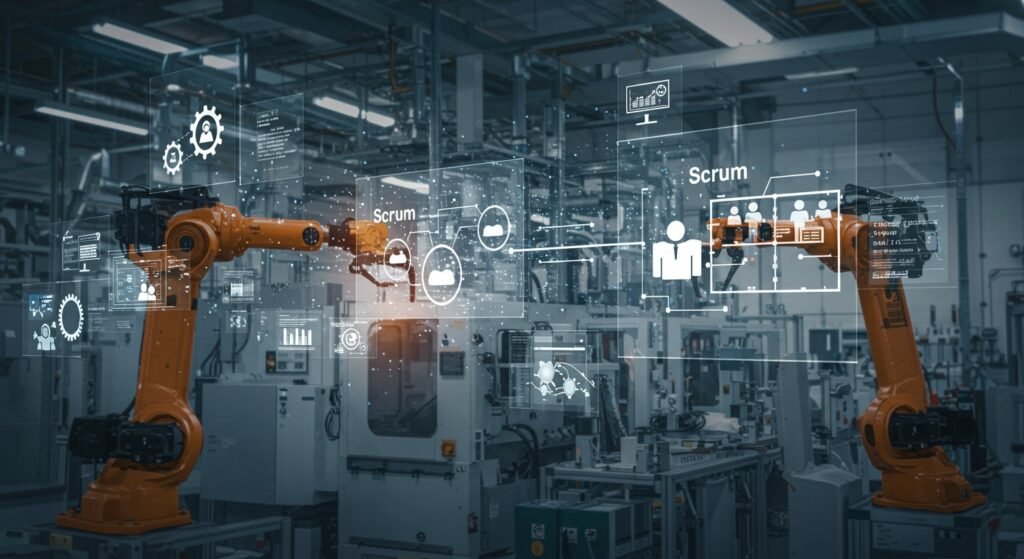
In today’s rapidly advancing industrial environments, the concept of Risk management has transcended traditional safety protocols to become a critical component of operational success and strategic planning. The intricate interplay of cutting-edge technology, complex supply chains, and dynamic global markets introduces a myriad of potential hazards that demand a proactive and sophisticated approach. Effective risk management is no longer merely about reacting to incidents; it’s about anticipating challenges, building resilience, and fostering an environment where innovation can thrive securely. This article delves into the crucial aspects of managing risk within these high-stakes settings, exploring methodologies and best practices that ensure both safety and productivity.

Table of Contents
- The Evolving Landscape of Industrial Risk
- Key Pillars of Effective Risk Management
- Implementing a Robust Risk Framework
- Conclusion
The Evolving Landscape of Industrial Risk
Advanced industrial environments, characterized by Industry 4.0 technologies like IoT, AI, robotics, and automation, present a unique set of risks. While these technologies promise unprecedented efficiencies and capabilities, they also introduce new vulnerabilities, from cyber-physical system attacks to complex operational failures. Understanding this evolving landscape is the first step towards robust Risk mitigation.
Emerging Technologies and New Challenges
The integration of cyber-physical systems blurs the lines between digital and physical threats. A cyberattack on an industrial control system, for example, can have immediate and severe physical consequences, including equipment damage, production halts, and even human injury. Furthermore, the sheer volume of data generated by IoT devices creates data security and privacy risks that must be carefully managed.
Regulatory Compliance and Ethical Considerations
Beyond technological risks, industries face increasing pressure from regulatory bodies regarding safety, environmental impact, and data governance. Non-compliance can lead to hefty fines, reputational damage, and legal action. Ethical considerations also play a significant role, particularly concerning AI decision-making and the impact of automation on the workforce.
Key Pillars of Effective Risk Management
A structured approach to risk management involves several interconnected pillars, each crucial for comprehensive coverage.
Identification and Assessment
The initial phase involves systematically identifying all potential risks – operational, financial, strategic, environmental, and reputational. This includes detailed hazard analyses, FMEAs (Failure Mode and Effects Analysis), and risk registers. Once identified, risks are assessed based on their likelihood and potential impact. This qualitative and quantitative analysis helps prioritize which risks require immediate attention.
Mitigation and Control Strategies
After assessment, strategies are developed to mitigate or control identified risks. This can involve implementing engineering controls, administrative procedures, personal protective equipment (PPE), or insurance. The goal is to reduce either the likelihood of the risk occurring or the severity of its impact. Here’s a brief overview of common mitigation strategies:
| Risk Type | Description | Mitigation Strategy Examples |
|---|---|---|
| Operational | Equipment failure, process errors | Predictive maintenance, robust SOPs, redundancy |
| Cybersecurity | Data breaches, system hacks | Firewalls, encryption, regular audits, employee training |
| Environmental | Pollution, resource depletion | Waste reduction programs, sustainable practices, spill containment |
| Supply Chain | Disruptions, supplier insolvency | Diversified sourcing, buffer stock, supplier audits |
Monitoring and Review
Risk management is an ongoing process. Regular monitoring of identified risks and the effectiveness of implemented controls is essential. This involves performance indicators, incident reporting, and periodic reviews to adapt strategies as new risks emerge or existing ones change in severity or likelihood. Continuous improvement is key to maintaining a resilient industrial environment.
Implementing a Robust Risk Framework
Developing a comprehensive risk framework requires integrating risk management into the core business processes and culture of the organization.
Leveraging Data Analytics and AI
Modern industrial environments generate vast amounts of data. Advanced analytics and AI can be harnessed to identify patterns, predict potential failures, and automate risk detection. Machine learning algorithms can analyze sensor data to forecast equipment breakdowns, while AI-powered surveillance systems can detect unsafe conditions in real-time. For more insights on data-driven approaches, you might find this external resource on risk-informed decision making helpful.
Fostering a Culture of Safety
Technology alone is insufficient. A strong culture of safety and Risk awareness, from the top floor to the factory floor, is paramount. This involves continuous training, encouraging employees to report near misses, and empowering them to take action when unsafe conditions are identified. Management must champion these initiatives and integrate them into performance metrics.
For further reading on integrating safety protocols into daily operations, consider exploring our article on Operational Excellence in Manufacturing.
Conclusion
Effective risk management in advanced industrial environments is a multifaceted challenge that requires a holistic, integrated, and proactive approach. By understanding the evolving landscape, establishing robust pillars of identification, assessment, mitigation, and monitoring, and embedding a strong risk culture supported by technology, industries can navigate complexities, protect assets, ensure worker safety, and ultimately achieve sustainable growth. Embracing the challenge of managing Risk is not just about avoiding failure; it’s about enabling success in the most demanding settings.