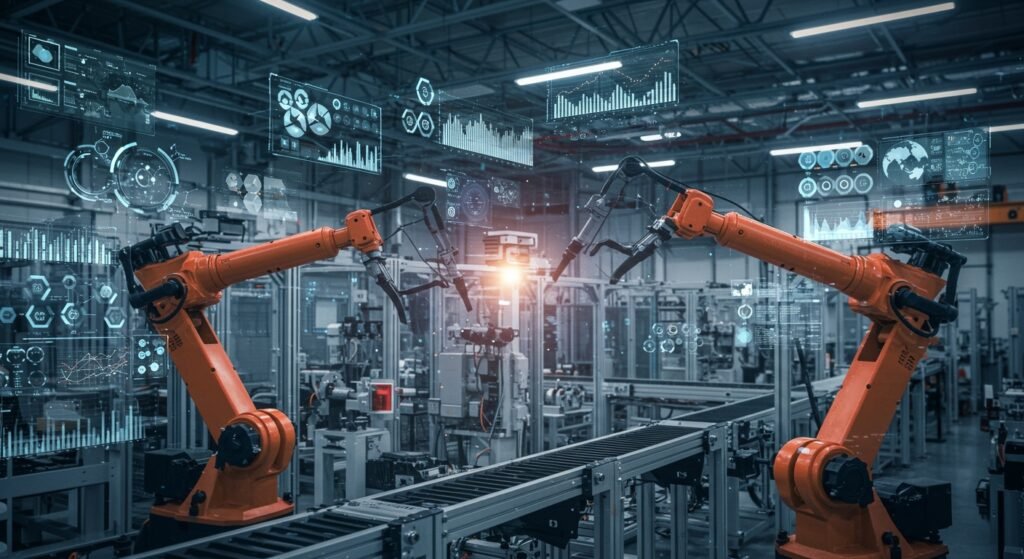
Industrial Engineering in Supporting Innovation
In an era defined by rapid technological advancements and fierce global competition, innovation is no longer a luxury but a necessity for survival and growth. At the heart of this relentless pursuit of progress lies Industrial Engineering—a discipline focused on optimizing complex processes, systems, and organizations. Often seen as the silent force behind efficiency, Industrial Engineering plays a pivotal role in not just improving existing operations but actively creating the conditions for groundbreaking innovation to flourish. This article explores how Industrial Engineering systematically supports, enables, and accelerates innovation across various sectors, transforming ideas into tangible, impactful realities.
Table of Contents
- What is Industrial Engineering?
- The Core Principles of Industrial Engineering
- Industrial Engineering’s Role in Driving Innovation
- Case Studies: Industrial Engineering in Action
- The Future of Industrial Engineering and Innovation
- Conclusion
What is Industrial Engineering?
Industrial Engineering is a branch of engineering that deals with the optimization of complex processes, systems, or organizations. Industrial engineers work to eliminate waste of time, money, materials, energy, and other resources. Unlike other engineering disciplines that focus on specific products or scientific principles, industrial engineering is concerned with how to improve entire systems and organizations—human, machine, and material—to ensure maximum efficiency and quality. This holistic approach makes it uniquely positioned to tackle the multifaceted challenges of innovation.

The Core Principles of Industrial Engineering
The foundation of industrial engineering rests on several key principles that are directly transferable to fostering an innovative environment. These principles provide the framework for systematic analysis and improvement.
Optimizing Processes
At its heart, industrial engineering is about process optimization. This involves analyzing workflows, identifying inefficiencies, and redesigning processes to be more effective and efficient. In the context of innovation, this means streamlining the research and development (R&D) pipeline, accelerating prototyping, and reducing time-to-market for new products and services. By standardizing best practices and eliminating redundant steps, industrial engineers create a fertile ground where creative ideas can evolve into practical solutions without getting bogged down by operational hurdles.
Enhancing Productivity
Productivity enhancement isn’t just about doing more with less; it’s about enabling teams to focus on high-value tasks. Industrial engineers implement strategies such as layout optimization, work-measurement techniques, and ergonomic designs to improve the working conditions and output of employees. When innovation teams are freed from cumbersome administrative tasks or inefficient resource allocation, they can dedicate more energy to ideation, experimentation, and problem-solving—essential ingredients for true innovation.
Industrial Engineering’s Role in Driving Innovation
The connection between industrial engineering and innovation is often underestimated. Yet, the methodologies and mindsets fostered by the discipline are directly instrumental in propelling innovation forward. The systematic approach ensures that innovative ideas are not just conceptualized but also successfully developed, implemented, and scaled.
Identifying Bottlenecks
Innovation pipelines often suffer from bottlenecks—points of congestion that slow down progress. Industrial engineers are experts at identifying these constraints, whether they are in resource allocation, decision-making processes, or communication flows. By applying tools like value stream mapping and simulation, they can pinpoint areas where innovation stalls and propose targeted solutions to unblock pathways, ensuring a smoother flow from concept to commercialization.
Implementing Lean and Agile Methodologies
Lean and Agile methodologies, heavily influenced by industrial engineering principles, are now cornerstones of innovation management. Lean manufacturing, originating from the Toyota Production System, emphasizes minimizing waste and maximizing value. Agile development, common in software, promotes iterative development, flexibility, and rapid response to change. Industrial engineers are key in adapting these principles to R&D and new product development, enabling faster cycles of learning, adaptation, and delivery. This approach significantly reduces the risk associated with innovation by allowing for early validation and course correction.
Leveraging Data and Analytics
Modern industrial engineering heavily relies on data analytics to make informed decisions. By collecting and analyzing data on performance metrics, customer feedback, and market trends, industrial engineers can provide innovation teams with critical insights. This data-driven approach helps in validating assumptions, prioritizing projects, and understanding the potential impact of new ideas. Predictive analytics, for instance, can help anticipate market needs, guiding the direction of future innovations and ensuring that efforts are focused on areas with the highest potential return.
Fostering a Culture of Continuous Improvement
Innovation is not a one-time event; it’s an ongoing process. Industrial engineering instills a culture of continuous improvement (Kaizen), where every team member is encouraged to identify opportunities for enhancement. This mindset is crucial for sustainable innovation, as it promotes constant questioning of the status quo, experimentation, and learning from failures. When an organization embraces continuous improvement, innovation becomes ingrained in its DNA, leading to a steady stream of advancements.
Case Studies: Industrial Engineering in Action
Across diverse sectors, industrial engineering has been instrumental in supporting breakthrough innovations. Here are a few examples:
| Sector | Industrial Engineering Application | Innovation Supported |
|---|---|---|
| Automotive | Lean manufacturing, supply chain optimization | Electric vehicle production efficiency, autonomous driving systems development |
| Healthcare | Process mapping, patient flow analysis | Streamlined emergency room operations, remote patient monitoring systems |
| Logistics | Warehouse automation, route optimization | Next-day delivery services, drone delivery pilot programs |
| Technology | Agile development, software deployment pipelines | Rapid feature releases, scalable cloud computing infrastructure |
The Future of Industrial Engineering and Innovation
The synergy between industrial engineering and innovation is set to deepen further with the advent of technologies like Artificial Intelligence (AI), Machine Learning (ML), and the Internet of Things (IoT). Industrial engineers will be at the forefront of designing smart factories, optimizing complex data networks, and creating hyper-efficient innovation ecosystems. Their ability to integrate disparate systems and optimize human-technology interaction will be crucial in unlocking the full potential of these emerging technologies for truly transformative innovations.
Conclusion
Industrial Engineering is far more than just a discipline for cost-cutting or efficiency gains; it is a fundamental enabler of innovation. By providing the tools, methodologies, and mindset to optimize processes, enhance productivity, identify bottlenecks, and foster continuous improvement, industrial engineers create the fertile ground where novel ideas can not only take root but also flourish and scale. Their systematic approach ensures that innovation is not left to chance but is a predictable outcome of well-designed systems and purposeful execution. To learn more about optimizing your business processes, check out this article on business process optimization. For further insights into related fields, explore our operations management strategies content.