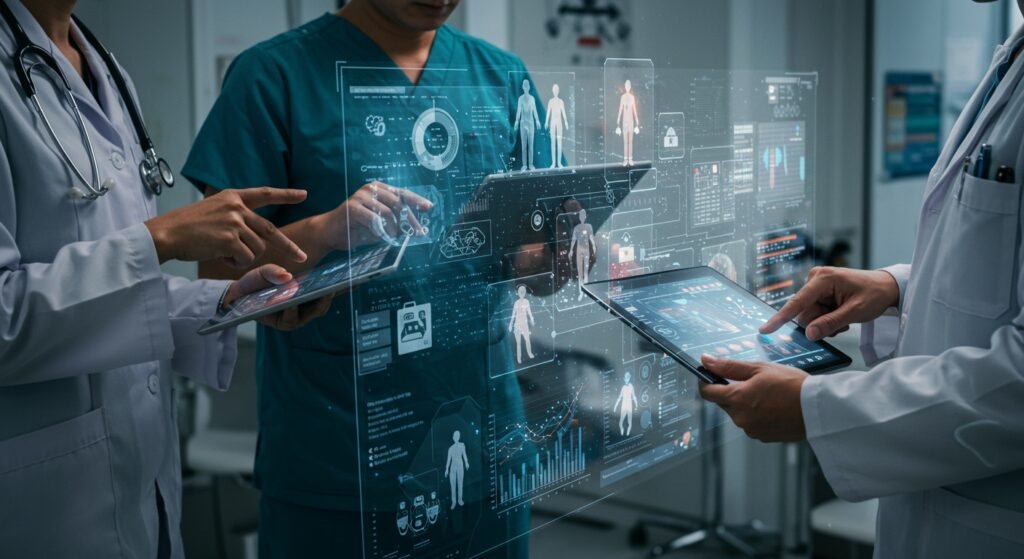
Simulation and Modeling in Healthcare Process Improvement
The healthcare landscape is constantly evolving, facing pressures from increasing patient demands, resource constraints, and the need for ever-higher quality of care. In this complex environment, traditional methods of process improvement often fall short. This is where healthcare simulation and modeling emerge as powerful tools, offering a revolutionary approach to understanding, optimizing, and transforming healthcare operations. By creating virtual replicas of real-world systems, healthcare institutions can experiment with changes, predict outcomes, and refine strategies without disrupting actual patient care, leading to significant gains in efficiency, patient safety, and overall system performance.
Table of Contents
- What is Healthcare Simulation and Modeling?
- Key Benefits of Simulation and Modeling in Healthcare
- How Simulation Works: The Modeling Process
- Case Study: A Hospital’s Success with Simulation
- Challenges and Future of Healthcare Simulation
- Getting Started with Process Improvement
What is Healthcare Simulation and Modeling?
Healthcare simulation refers to the use of artificial environments, models, or scenarios to represent real-world clinical or operational situations. While often associated with training medical professionals, its application extends significantly into process improvement. In this context, simulation modeling involves creating a computer-based, dynamic representation of a healthcare system, such as an emergency department, operating room suite, or an entire hospital’s patient flow. These models incorporate various elements like patient arrivals, staff availability, resource allocation, and procedural steps.
Beyond Training: Healthcare Simulation for Process Improvement
Unlike clinical simulations focused on skill development, process improvement simulations are designed to test the impact of operational changes. For instance, a hospital might simulate the effect of adding more beds, reconfiguring patient pathways, or adjusting staffing schedules. This allows managers and clinicians to visualize bottlenecks, identify inefficiencies, and evaluate potential solutions in a risk-free virtual environment before implementing them in the real world.

Key Benefits of Simulation and Modeling in Healthcare
The strategic application of simulation and modeling offers numerous advantages for healthcare organizations striving for excellence.
Optimizing Patient Flow and Throughput
One of the most critical areas where simulation shines is in enhancing patient flow. Long wait times, crowded emergency departments, and delays in discharge are common challenges. Simulation models can accurately predict how changes to scheduling, bed management, or staffing might impact patient wait times, length of stay, and overall throughput. This data-driven insight empowers decision-makers to implement strategies that reduce bottlenecks and improve patient experience.
Enhancing Resource Utilization
Healthcare resources, including staff, equipment, and physical space, are expensive and often scarce. Simulation allows for a detailed analysis of how these resources are currently being utilized and how they would perform under different scenarios. For example, a model could help determine the optimal number of MRI machines needed or the best allocation of nursing staff across different units to minimize idle time and maximize service delivery.
Improving Staffing Models
Staffing shortages and burnout are prevalent issues. Simulation can evaluate various staffing models, helping to determine the ideal number and skill mix of personnel required to meet patient demand effectively. By running “what-if” scenarios, organizations can identify staffing efficiencies, forecast the impact of staff reductions or additions, and ensure adequate coverage without over-scheduling.
Risk Mitigation and Strategic Planning
Before investing significant capital or implementing major operational overhauls, healthcare leaders can use simulation to assess potential risks and validate strategic decisions. This could involve simulating the impact of a new service line, a facility expansion, or a response plan for a public health crisis. By identifying potential failure points or unintended consequences in the virtual realm, organizations can refine their plans and mitigate risks effectively.
How Simulation Works: The Modeling Process
Implementing a successful healthcare simulation project involves a structured approach.
Data Collection and Model Building
The first step involves gathering comprehensive data about the existing system. This includes patient arrival rates, service times, resource capacities, staff schedules, and process pathways. This data is then used to construct a digital model that accurately reflects the real-world operation. Sophisticated software tools are employed to build these complex models.
Running Scenarios and Analysis
Once the model is validated, various scenarios can be tested. These “what-if” questions might explore changes in policies, staffing levels, facility layouts, or technology. The simulation software then runs these scenarios multiple times, generating statistical data on key performance indicators such as wait times, resource utilization, and patient throughput. The results are analyzed to identify the most effective interventions.
Implementation and Monitoring
Based on the simulation’s insights, optimized processes are implemented in the real-world healthcare setting. Crucially, the impact of these changes must be continuously monitored and evaluated against the simulation’s predictions. This feedback loop allows for further fine-tuning and ensures that the improvements are sustained.
Case Study: A Hospital’s Success with Simulation
Consider a large urban hospital struggling with emergency department (ED) overcrowding and long patient wait times. They decided to implement healthcare simulation to address these issues. The simulation team built a detailed model of their ED, incorporating patient arrival patterns, triage processes, physician and nurse staffing, bed availability, and diagnostic service times.
Through the simulation, they discovered that the primary bottleneck wasn’t a lack of beds, but rather inefficiencies in the discharge process from inpatient units, which prevented ED patients from being admitted promptly. They also identified specific times of day when physician coverage in the fast-track area was suboptimal. By testing various interventions in the simulation, they arrived at a revised discharge protocol and an optimized physician schedule.
Here’s a summary of their findings and outcomes:
| Metric | Before Simulation | After Simulation (Predicted) | Actual Improvement (Post-Implementation) |
|---|---|---|---|
| Average ED Wait Time | 120 minutes | 85 minutes | 88 minutes |
| ED Length of Stay (Discharged) | 240 minutes | 190 minutes | 195 minutes |
| Inpatient Bed Turnaround Time | 180 minutes | 130 minutes | 135 minutes |
| Patient Satisfaction (ED) | 65% | 80% | 78% |
The hospital successfully reduced ED wait times and improved patient satisfaction, demonstrating the tangible benefits of a data-driven approach enabled by simulation.
Challenges and Future of Healthcare Simulation
While powerful, simulation modeling is not without its challenges. It requires significant data, expertise in modeling software, and a deep understanding of the healthcare processes being simulated. Initial setup can be time-consuming. However, ongoing advancements in AI and machine learning are making simulation tools more accessible and powerful. The future of healthcare simulation promises even more integrated systems, predictive analytics, and real-time operational optimization. For more insights into operational analytics, you might find resources at INFORMS helpful.
Getting Started with Process Improvement
For organizations looking to embark on their process improvement journey, understanding the fundamentals is key. Begin by identifying critical pain points and gathering initial data. Consider engaging with experts in the field or exploring dedicated software solutions. A solid foundation in quality improvement methodologies, as discussed in our article on Lean Six Sigma in Healthcare, can significantly bolster your efforts alongside simulation.
Conclusion
Healthcare simulation and modeling represent a paradigm shift in how healthcare systems can be managed and improved. By providing a safe, virtual environment to test new ideas and identify optimal solutions, these tools empower organizations to overcome operational challenges, enhance efficiency, improve patient outcomes, and ultimately deliver higher quality care in a sustainable manner. Embracing this technology is no longer an option but a necessity for forward-thinking healthcare providers.