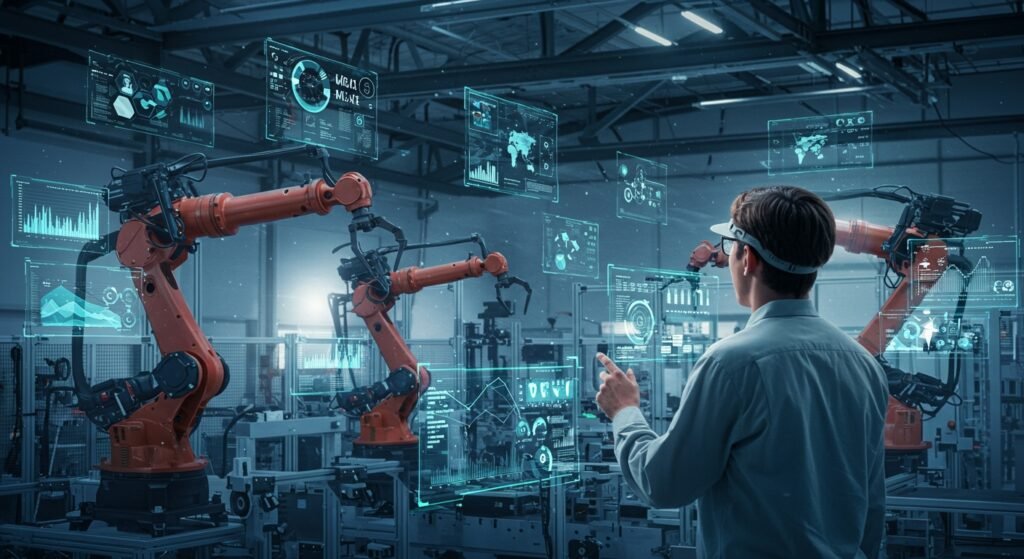
MSc in Smart Manufacturing and Industry 4.0: Your Gateway to the Future
The industrial landscape is undergoing a monumental transformation, driven by advancements in technology and a relentless pursuit of efficiency. At the heart of this revolution is smart manufacturing, a paradigm shift that integrates cutting-edge digital technologies with traditional industrial processes. An MSc in Smart Manufacturing and Industry 4.0 offers a unique opportunity to become a leader in this dynamic field, equipping you with the specialized knowledge and skills required to navigate and innovate within the factories of the future. This advanced degree is designed for engineers and technologists eager to shape the next era of industrial production.

Table of Contents
- What is Smart Manufacturing and Industry 4.0?
- Why Pursue an MSc in Smart Manufacturing?
- Key Curriculum Areas
- Choosing the Right Program
- The Future of Industry with Smart Manufacturing
What is Smart Manufacturing and Industry 4.0?
Smart manufacturing represents the complete integration and collaboration of all aspects of manufacturing, from product design and engineering to production, supply chain, and services. It leverages technologies like the Internet of Things (IoT), artificial intelligence (AI), machine learning, big data analytics, and advanced robotics to create highly optimized, flexible, and responsive production systems. This vision is encapsulated within the broader concept of Industry 4.0, which refers to the fourth industrial revolution.
The Pillars of Industry 4.0
Industry 4.0 is built upon several foundational technological pillars. These include cyber-physical systems (CPS), the Industrial Internet of Things (IIoT), cloud computing, big data analytics, artificial intelligence, robotics, additive manufacturing (3D printing), and augmented reality. Together, these technologies enable factories to become “smart,” capable of self-optimization, predictive maintenance, and highly customized production. Understanding these pillars is crucial for anyone looking to excel in modern industrial environments.
Why Pursue an MSc in Smart Manufacturing?
In a world where technological obsolescence is a constant threat, an MSc in Smart Manufacturing provides a critical advantage. This postgraduate program is specifically designed to develop experts who can design, implement, and manage advanced manufacturing systems. It’s more than just learning about new technologies; it’s about understanding how to strategically integrate them for optimal business outcomes and sustainable operations.
Bridging the Skills Gap
The rapid evolution of Industry 4.0 has created a significant skills gap in the global workforce. Companies are actively seeking professionals with expertise in areas like data analytics for manufacturing, industrial automation, cybersecurity for operational technology, and advanced materials. An MSc in Smart Manufacturing directly addresses this need, positioning graduates as highly desirable candidates capable of leading digital transformation initiatives.
Career Opportunities in a Digital Age
Graduates with an MSc in this field can pursue a diverse range of exciting careers. Roles include Smart Factory Manager, Industrial IoT Specialist, Automation Engineer, Data Scientist (Manufacturing), Digital Manufacturing Consultant, and R&D Engineer for advanced production systems. The demand for these roles is projected to grow significantly as more industries embrace smart manufacturing principles.
Key Curriculum Areas
A typical MSc program in Smart Manufacturing and Industry 4.0 covers a broad spectrum of subjects, ensuring a holistic understanding of this complex field. While specific modules may vary between institutions, common themes include:
| Module Area | Key Topics Covered | Relevance to Industry 4.0 |
|---|---|---|
| Industrial IoT & Cyber-Physical Systems | Sensor networks, data acquisition, cloud integration | Real-time data for decision making |
| Advanced Robotics & Automation | Collaborative robots, autonomous systems, motion control | Automating complex tasks, enhancing safety |
| Data Analytics for Manufacturing | Big data, machine learning, predictive analytics | Optimizing processes, predictive maintenance |
| Digital Twin & Simulation | Virtual models, process simulation, system optimization | Prototyping, scenario planning, risk reduction |
| Additive Manufacturing | 3D printing technologies, design for AM | Customization, rapid prototyping, complex geometries |
| Cybersecurity in OT/IT | Industrial network security, data protection, risk management | Protecting critical infrastructure and intellectual property |
These areas are often complemented by modules on supply chain management, lean manufacturing, and project management, all adapted to the Industry 4.0 context.
Choosing the Right Program
Selecting the right MSc program is crucial. Consider factors such as faculty expertise, industry partnerships, research opportunities, and the practical application of learned concepts. Many universities offer specialized tracks within their programs, allowing students to focus on areas like automation, data science, or advanced materials. To get a better idea of what to look for, you might want to explore our guide on Master’s in Engineering.
The Future of Industry with Smart Manufacturing
The trajectory of smart manufacturing is clear: it’s not just the future, it’s the present, constantly evolving. Companies that embrace these technologies are seeing improved efficiency, reduced costs, enhanced product quality, and greater flexibility. The shift towards more sustainable and resilient supply chains is also heavily influenced by smart manufacturing principles. As technologies like quantum computing and advanced AI become more accessible, the capabilities of smart factories will only continue to expand.
For those interested in staying updated on global manufacturing trends and research, reputable organizations like the National Institute of Standards and Technology (NIST) provide valuable resources and insights into the ongoing developments in this field.
An MSc in Smart Manufacturing and Industry 4.0 is more than just an academic pursuit; it’s an investment in a future-proof career. It provides the strategic and technical foundation necessary to lead industrial innovation, contributing to more efficient, sustainable, and globally competitive manufacturing ecosystems. If you’re ready to be at the forefront of the next industrial revolution, this degree could be your gateway.