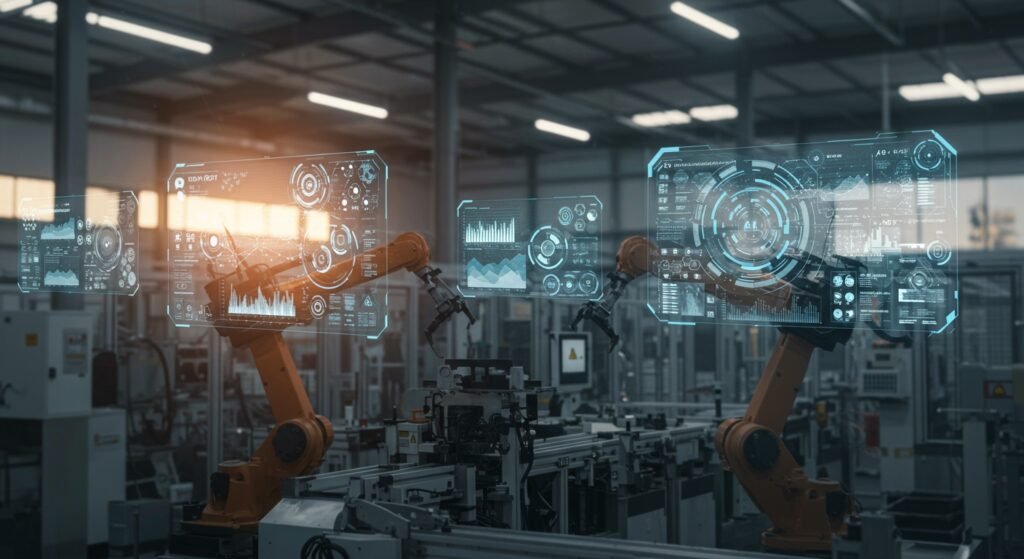
AI Applications in Production Planning: Unlocking New Efficiencies
In today’s rapidly evolving industrial landscape, the quest for operational excellence is relentless. Businesses are constantly seeking innovative ways to streamline processes, reduce costs, and enhance productivity. This is where AI applications in production planning emerge as a game-changer. Artificial Intelligence is no longer just a futuristic concept; it’s a powerful, tangible tool transforming how goods are made, from forecasting demand to optimizing resource allocation. Integrating AI into production planning processes offers unprecedented levels of precision, responsiveness, and efficiency, enabling companies to stay competitive and agile in a dynamic market.

Table of Contents
- The Transformative Power of AI in Production Planning
- Key AI Applications Revolutionizing Production
- Implementing AI: Challenges and Solutions
- The Future of Production with AI
- Conclusion
The Transformative Power of AI in Production Planning
The traditional methods of production planning often struggle with the complexity and volatility of modern markets. Manual data analysis and static planning models can lead to inefficiencies, excess inventory, or missed production targets. AI systems, however, are designed to handle vast datasets and identify intricate patterns that human analysts might overlook. This capability allows for more accurate predictions and more adaptable planning strategies.
Enhanced Forecasting and Demand Prediction
One of the most significant contributions of AI to production planning is its ability to deliver highly accurate demand forecasts. By analyzing historical sales data, market trends, economic indicators, seasonal fluctuations, and even social media sentiment, AI algorithms can predict future demand with remarkable precision. This foresight enables businesses to optimize inventory levels, reducing carrying costs and minimizing stockouts. Predictive analytics powered by AI ensures that production schedules are aligned with actual market needs, preventing overproduction or underproduction.
Optimized Resource Allocation
AI plays a crucial role in optimizing the allocation of resources, including raw materials, machinery, and human capital. Machine learning models can analyze production capacities, supplier lead times, and labor availability to create optimal production schedules. This ensures that resources are utilized efficiently, reducing waste and maximizing output. For instance, AI can dynamically reallocate tasks to available machines or suggest optimal shift patterns for workers based on real-time data, leading to substantial operational cost savings and improved throughput.
Key AI Applications Revolutionizing Production
Beyond forecasting and resource allocation, AI’s influence permeates several other critical areas of production. Here are some of the most impactful applications:
Predictive Maintenance for Uninterrupted Operations
Unplanned machinery breakdowns can halt production, leading to significant delays and costs. AI-driven predictive maintenance systems monitor machine health in real-time using sensors that collect data on temperature, vibration, sound, and other parameters. Machine learning algorithms analyze this data to predict potential failures before they occur, allowing maintenance to be scheduled proactively. This approach minimizes downtime, extends equipment lifespan, and ensures continuous production flows.
Real-time Scheduling and Dynamic Adjustments
In fast-paced manufacturing environments, unforeseen events like material shortages or equipment malfunctions are inevitable. AI systems can process real-time data from the factory floor and instantly recalculate production schedules, adjusting for disruptions. This dynamic scheduling capability ensures that operations remain agile and responsive, maintaining efficiency even when unexpected challenges arise. This responsiveness is a significant advantage over rigid, static planning systems.
Quality Control and Defect Detection
Maintaining high-quality standards is paramount. AI-powered vision systems, using computer vision and machine learning, can inspect products on the assembly line with greater speed and accuracy than human inspectors. These systems can identify microscopic defects, inconsistencies, or deviations from specifications, flagging faulty products immediately. This not only improves product quality but also reduces waste from defective items and enhances overall customer satisfaction. To learn more about how AI impacts various industrial processes, check out our guide on supply chain optimization.
Implementing AI: Challenges and Solutions
While the benefits of integrating AI are clear, implementation can present its own set of challenges. Data quality, integration with legacy systems, and the need for specialized skills are common hurdles. However, with careful planning and strategic investment, these can be overcome.
| Challenge | AI Solution |
|---|---|
| Poor Data Quality | AI-driven data cleansing and validation tools |
| Integration Complexity | APIs and middleware for seamless system communication |
| Lack of Skilled Personnel | Training programs, partnerships with AI specialists, user-friendly AI platforms |
| Resistance to Change | Pilot programs, clear communication of benefits, stakeholder involvement |
Overcoming these challenges requires a clear strategy, investment in the right technologies, and a commitment to upskilling the workforce. For more insights on global manufacturing trends, you can refer to reports from organizations like World Economic Forum on Industry 4.0.
The Future of Production with AI
The future of production planning is undeniably intertwined with the continuous advancement of AI. As AI technologies become more sophisticated, we can expect even greater levels of automation, predictive power, and adaptive capabilities. Imagine factories that are not only smart but truly autonomous, making real-time decisions across the entire value chain. This will lead to hyper-efficient, resilient, and sustainable manufacturing operations.
Further innovations will likely include prescriptive analytics, where AI not only predicts what will happen but also recommends the best course of action to achieve specific outcomes. The integration of AI with other Industry 4.0 technologies like IoT, big data, and robotics will create truly connected and intelligent manufacturing ecosystems. This will redefine efficiency and open new avenues for customized production and faster time-to-market.
Conclusion
The adoption of AI in production planning is no longer a luxury but a necessity for businesses aiming for sustained growth and competitiveness. From refining demand forecasts and optimizing resource use to enabling predictive maintenance and enhancing quality control, AI offers a suite of powerful tools that can fundamentally transform manufacturing operations. While implementation challenges exist, the long-term benefits in terms of efficiency, cost reduction, and agility are immense. Embracing AI is about building smarter, more resilient production systems ready for the demands of tomorrow’s global economy.