AI-Driven Process Optimization Studies: Revolutionizing Industrial Efficiency
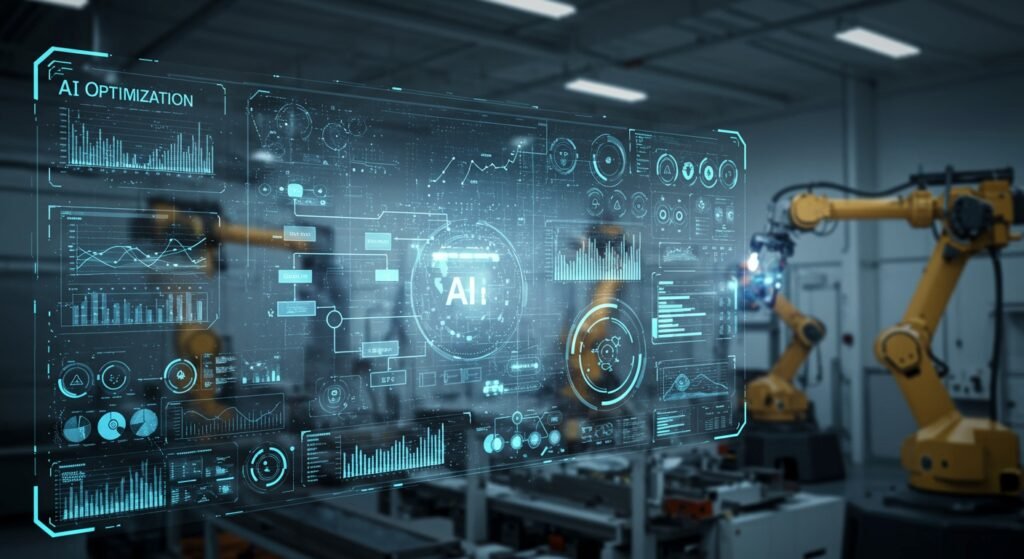
In today’s rapidly evolving industrial landscape, the pursuit of maximum efficiency and minimal waste is paramount. This quest has led to the emergence of advanced methodologies, with AI optimization standing out as a transformative force. AI-driven process optimization studies are fundamentally changing how industries approach operational challenges, offering unparalleled insights and automation capabilities that were once beyond reach. From manufacturing floors to complex logistical networks, the application of artificial intelligence is paving the way for smarter, more adaptive, and significantly more productive systems.
Table of Contents
- Introduction: The Power of AI Optimization
- What is AI-Driven Process Optimization?
- Key Benefits for Industrial Systems
- Practical Applications and Case Studies
- The Role of MSc Research in Advancing AI Optimization
- Challenges and Future Outlook
- Conclusion
Introduction: The Power of AI Optimization
As detailed above, the industrial sector is undergoing a profound transformation, driven by the integration of artificial intelligence. This shift is particularly evident in process optimization, where traditional methods are being augmented, and often superseded, by AI-powered solutions. These studies leverage machine learning algorithms, deep learning, and predictive analytics to analyze vast datasets, identify inefficiencies, and recommend or even autonomously implement improvements. The goal is clear: to create self-optimizing systems that can adapt to changing conditions and consistently perform at peak efficiency.

What is AI-Driven Process Optimization?
At its core, AI-driven process optimization involves using artificial intelligence technologies to enhance the performance, efficiency, and reliability of industrial processes. This can range from optimizing energy consumption in data centers to streamlining production lines in factories or improving supply chain logistics. AI algorithms can detect subtle patterns and correlations that human operators might miss, leading to more informed decision-making and automated adjustments. It’s not just about automating existing tasks, but about discovering entirely new ways to improve operations through continuous learning and adaptation.
Components of AI Optimization
Implementing successful AI optimization strategies requires a combination of several key components:
- Data Collection and Integration: Gathering high-quality data from sensors, PLCs, SCADA systems, and other sources is the first crucial step.
- Machine Learning Models: Developing and training models (e.g., neural networks, reinforcement learning, genetic algorithms) to predict outcomes, classify data, or make decisions.
- Real-time Analytics: Processing data as it arrives to enable immediate insights and reactive adjustments.
- Automation and Control Systems: Integrating AI recommendations or direct AI control into the operational infrastructure.
- Human Oversight and Collaboration: Ensuring that AI systems complement human expertise rather more than entirely replacing it, especially in critical decision-making.
Key Benefits for Industrial Systems
The advantages of integrating AI into industrial processes are multi-faceted, yielding significant improvements across various operational metrics.
Enhanced Efficiency and Cost Savings
Perhaps the most immediate and tangible benefit of AI optimization is the drastic improvement in operational efficiency. By precisely tuning parameters, reducing idle times, and optimizing resource allocation, AI can lead to substantial reductions in energy consumption, raw material waste, and labor costs. For instance, in chemical manufacturing, AI can optimize reaction conditions to maximize yield while minimizing energy input, leading to millions in savings annually.
Predictive Maintenance and Quality Control
AI’s ability to analyze sensor data in real-time allows for highly accurate predictive maintenance. Instead of scheduled maintenance or reactive repairs, AI can forecast equipment failures before they occur, enabling proactive interventions that minimize downtime and extend asset lifespan. Similarly, in quality control, AI-powered vision systems can detect defects with far greater speed and accuracy than human inspection, ensuring consistent product quality and reducing recalls.
Practical Applications and Case Studies
AI optimization is already making significant inroads across various sectors. Here’s a glance at some common applications:
| Industry Sector | AI Optimization Application | Expected Outcome |
|---|---|---|
| Manufacturing | Production line balancing, robot path optimization | Increased throughput, reduced bottlenecks |
| Energy | Smart grid management, energy consumption forecasting | Lower energy costs, improved grid stability |
| Logistics & Supply Chain | Route optimization, inventory management, demand forecasting | Faster delivery, reduced holding costs |
| Chemical Processing | Reaction parameter optimization, catalyst performance | Higher yield, less waste, improved safety |
| Healthcare | Resource allocation in hospitals, drug discovery pipeline optimization | Improved patient care, faster research |
The Role of MSc Research in Advancing AI Optimization
MSc research plays a crucial role in pushing the boundaries of AI optimization. Graduate students often delve into specific, complex problems within industrial settings, developing novel algorithms and frameworks that later find their way into real-world applications. These academic endeavors not only contribute to the theoretical understanding of AI but also provide practical solutions that industry can adopt. For those interested in pursuing advanced studies in this field, exploring various AI and Machine Learning degree programs can be a great starting point.
Challenges and Future Outlook
While the prospects for AI optimization are incredibly bright, several challenges remain. These include data privacy concerns, the need for robust and interpretable AI models, and the significant initial investment in infrastructure and talent. However, ongoing advancements in AI explainability (XAI) and the increasing availability of cloud-based AI platforms are helping to mitigate these hurdles.
Looking ahead, the future of AI optimization in industrial systems is one of continuous evolution. We can expect more autonomous systems, tighter integration with IoT devices, and the development of specialized AI models tailored to niche industrial challenges. The drive towards Industry 5.0, emphasizing human-AI collaboration and sustainability, will further cement the role of AI in creating resilient and highly optimized industrial ecosystems. For more insights into industrial automation trends, you might visit Industrial Automation Today.
Conclusion
AI-driven process optimization is no longer a futuristic concept but a present-day reality transforming industries worldwide. By harnessing the power of artificial intelligence, companies can achieve unprecedented levels of efficiency, reduce costs, enhance quality, and foster innovation. As the technology matures and becomes more accessible, its impact will only grow, cementing AI’s position as an indispensable tool for any organization striving for operational excellence in the 21st century.