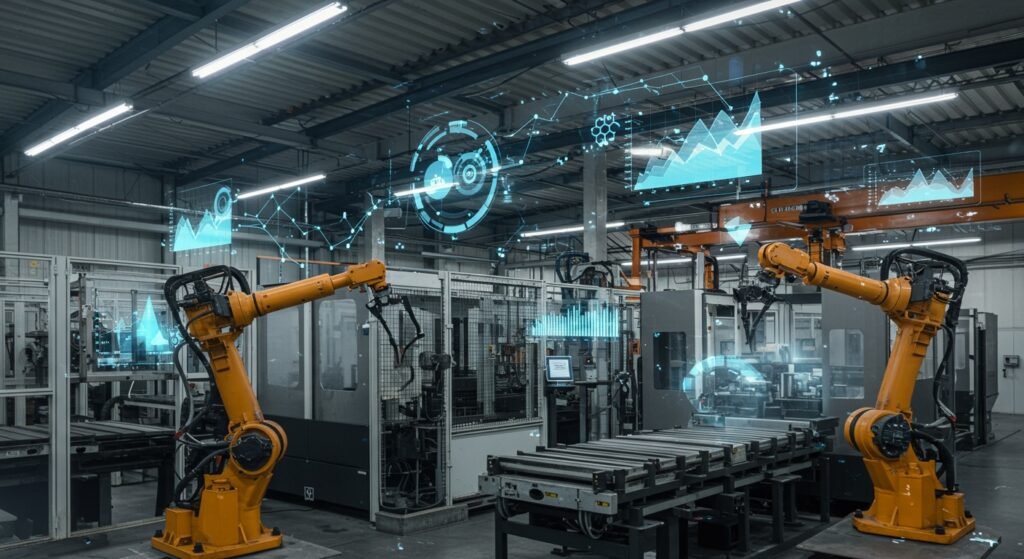
Big Data Analytics in Industrial Engineering: Unlocking Hidden Efficiency
In today’s rapidly evolving industrial landscape, the sheer volume, velocity, and variety of data generated are staggering. From sensor readings on machinery to supply chain logs and customer feedback, every aspect of an industrial operation produces invaluable information. This is where big data analytics steps in, transforming raw data into actionable insights that can revolutionize industrial engineering practices. By harnessing the power of advanced analytical techniques, companies can unlock hidden efficiencies, predict potential failures, optimize processes, and ultimately achieve a new level of operational excellence.

Table of Contents
- What is Big Data Analytics in Industrial Engineering?
- Key Applications of Big Data Analytics for Industrial Performance
- Benefits of Implementing Big Data Analytics
- Challenges and Future Outlook
- Conclusion
What is Big Data Analytics in Industrial Engineering?
Big data analytics refers to the process of examining large and varied data sets to uncover hidden patterns, unknown correlations, market trends, customer preferences, and other useful information. In industrial engineering, this involves collecting data from diverse sources like IoT sensors, manufacturing execution systems (MES), enterprise resource planning (ERP) software, and even external market data. The goal is to use this information to make data-driven decisions that enhance productivity, reduce costs, and improve overall system performance.
The Data Deluge
Modern industrial facilities are data factories themselves. Every machine, every product, every logistical movement generates data. The challenge isn’t a lack of information, but rather how to effectively process and interpret this ‘data deluge’ to gain a competitive edge.
From Raw Data to Actionable Insights
Big data analytics employs various techniques, including predictive modeling, machine learning, and statistical analysis, to sift through complex datasets. This allows industrial engineers to move beyond reactive problem-solving to proactive optimization, identifying inefficiencies and opportunities before they become critical issues.
Key Applications of Big Data Analytics for Industrial Performance
The application of big data analytics in industrial settings is vast and impactful, touching nearly every aspect of operations.
Predictive Maintenance
One of the most significant applications is predicting equipment failures before they occur. By analyzing sensor data from machinery—temperature, vibration, pressure, etc.—companies can identify patterns indicative of impending malfunction. This enables maintenance to be scheduled precisely when needed, minimizing downtime and extending asset lifespans. For more insights, read our article on Predictive Maintenance with AI.
Supply Chain Optimization
Big data helps optimize complex supply chains by providing real-time visibility into inventory levels, logistics, and demand fluctuations. This leads to more accurate forecasting, reduced lead times, and improved responsiveness to market changes. Efficient supply chains are crucial for overall industrial performance.
Quality Control and Process Improvement
By analyzing production line data, quality defects can be identified and traced back to their root causes much faster. This allows for rapid adjustments in manufacturing processes, leading to higher product quality and reduced waste. Statistical process control, augmented by big data, becomes incredibly powerful.
Energy Management
Industrial operations are often energy-intensive. Big data analytics can monitor energy consumption patterns across different machines and processes, identifying areas of waste and suggesting optimization strategies to reduce energy costs and environmental impact.
Comparing Traditional vs. Data-Driven Industrial Approaches
| Aspect | Traditional Approach | Data-Driven Approach (Big Data Analytics) |
|---|---|---|
| Maintenance | Reactive (break-fix) or Time-based | Predictive, Condition-based |
| Supply Chain | Historical data, Manual adjustments | Real-time visibility, Dynamic optimization |
| Quality Control | Post-production inspection, Sampling | In-line, Continuous monitoring, Root cause analysis |
| Decision Making | Intuition, Experience-based | Evidence-based, Algorithm-driven |
For further reading on how data is transforming industries globally, visit Forbes’ Big Data section.
Benefits of Implementing Big Data Analytics
The strategic integration of big data analytics brings a multitude of advantages to industrial enterprises.
Enhanced Operational Efficiency
By identifying bottlenecks, optimizing resource allocation, and streamlining workflows, analytics directly contributes to smoother, faster, and more efficient operations. This translates into higher throughput and better utilization of existing assets.
Cost Reduction and ROI
Predictive maintenance saves on costly emergency repairs and reduces downtime. Optimized supply chains cut inventory holding costs. Improved quality reduces rework and scrap. All these factors contribute to significant cost savings and a strong return on investment (ROI) for analytics initiatives.
Improved Decision Making
With real-time, accurate data and sophisticated analytical models, decision-makers are empowered to make more informed choices, faster. This agility is crucial in dynamic industrial environments.
Challenges and Future Outlook
While the benefits are clear, implementing big data analytics isn’t without its hurdles.
Data Security and Privacy
Handling vast amounts of sensitive operational data requires robust cybersecurity measures to protect against breaches and ensure compliance with regulations.
Skill Gap
There’s a growing demand for professionals who possess both industrial engineering knowledge and data science expertise. Bridging this skill gap through training and recruitment is vital for successful implementation.
Looking ahead, the integration of big data analytics with AI, machine learning, and the Industrial Internet of Things (IIoT) will only deepen. We can expect even more autonomous systems, self-optimizing factories, and hyper-personalized production, further cementing its role as a cornerstone of modern industrial engineering.
Conclusion
Big data analytics is no longer an optional luxury but a strategic imperative for industrial engineering. By providing unparalleled insights into complex operations, it enables organizations to move beyond traditional methods towards a future of continuous optimization, enhanced efficiency, and sustainable growth. Embracing these data-driven approaches is key to staying competitive and unlocking the full potential of modern industrial capabilities.