The Intersection of Big Data, Ergonomics, and Industrial Safety

In today’s rapidly evolving industrial landscape, the pursuit of enhanced efficiency often goes hand-in-hand with a crucial imperative: ensuring the safety and well-being of the workforce. This goal is now being profoundly reshaped by the capabilities of big data. The ability to collect, analyze, and interpret massive datasets from various sources is no longer just a trend in business intelligence; it’s becoming a cornerstone of modern industrial safety and ergonomic design. This article explores how big data is creating safer, more productive work environments by empowering proactive risk management and optimizing human-machine interactions.
Table of Contents
- The Synergistic Power of Big Data in Industrial Safety
- Practical Applications and Technologies
- Challenges and the Path Forward
- Conclusion
The Synergistic Power of Big Data in Industrial Safety
Industrial environments are complex ecosystems where even minor oversights can lead to significant consequences. Traditionally, safety measures were often reactive, implemented after an incident occurred. However, with the advent of big data, companies can now shift from a reactive stance to a highly proactive one, leveraging insights to prevent accidents before they happen.
From Reactive to Proactive: Predictive Analytics
Predictive analytics, powered by big data, allows organizations to identify patterns and predict potential hazards. By analyzing historical accident data, near-miss reports, equipment maintenance logs, environmental conditions, and even worker schedules, algorithms can flag situations or behaviors that indicate a higher risk of injury. For instance, data might reveal that a particular machine, when operated by new hires during specific shift times, has a statistically higher chance of malfunction or causing an ergonomic strain. This foresight enables targeted interventions, such as additional training, machine adjustments, or revised scheduling.
Identifying Ergonomic Risk Factors with Big Data
Ergonomics focuses on designing workplaces, products, and systems so that they fit the people who use them. Poor ergonomic design can lead to musculoskeletal disorders (MSDs), which are a leading cause of lost workdays. Big data helps pinpoint these risks by analyzing:
- Movement Patterns: Data from sensors, cameras, and wearable devices can track how workers move, identifying repetitive motions, awkward postures, or excessive force.
- Environmental Factors: Temperature, humidity, noise levels, and lighting data can be correlated with worker comfort and fatigue, impacting their risk of injury.
- Incident Correlation: Linking reported MSDs with specific tasks, tools, or workstations helps identify high-risk areas for ergonomic intervention.
Practical Applications and Technologies
The practical application of big data in industrial safety is facilitated by various cutting-edge technologies that collect and process information in real-time.
Wearable Tech and Sensor Data
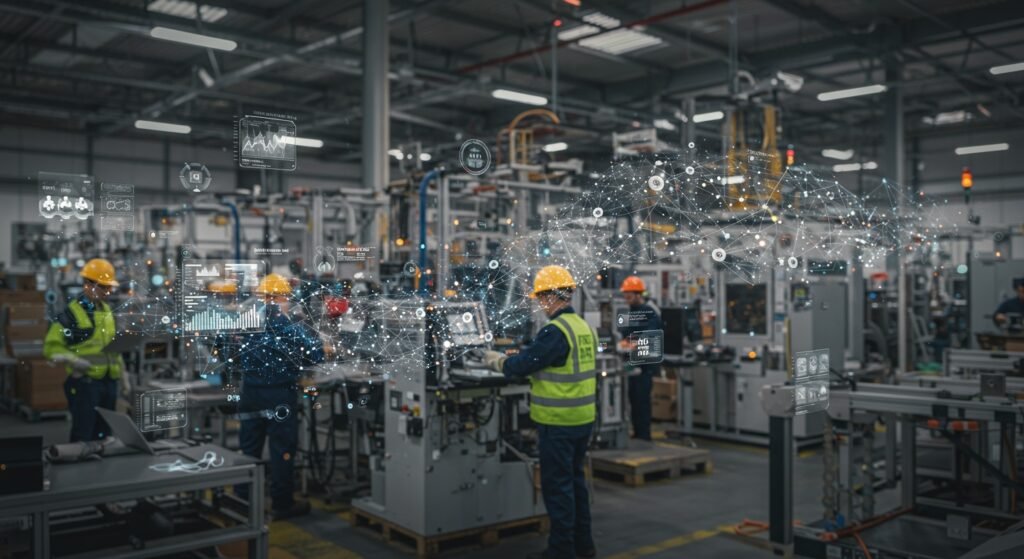
Wearable devices, from smart watches that monitor heart rate and fatigue to smart vests that track body posture and impact forces, are generating a continuous stream of data. These sensors can alert workers and supervisors to immediate dangers, such as elevated stress levels or proximity to moving machinery. Aggregated, this data provides a comprehensive overview of workplace demands and individual worker responses, enabling personalized ergonomic assessments and preventive measures.
Integrating Big Data Platforms for Comprehensive Insights
The true power of big data emerges when disparate data sources are integrated into a unified platform. This includes everything from human resources data (e.g., training records, experience levels) and environmental monitoring systems to machine telemetry and incident management software. By creating a holistic view, organizations can uncover correlations that would otherwise remain hidden. For more insights on leveraging integrated data for operational excellence, you might want to read our article on Data-Driven Operational Efficiency.
| Data Source | Examples of Data Collected | Safety Application |
|---|---|---|
| Wearable Sensors | Heart rate, body posture, movement patterns, fall detection | Fatigue monitoring, ergonomic risk assessment, immediate hazard alerts |
| Environmental Sensors | Temperature, humidity, air quality, noise levels | Hazardous condition alerts, climate control optimization, worker comfort |
| Machine Telemetry | Operating speed, vibration, fault codes, maintenance history | Predictive maintenance, equipment failure prevention, operational safety zones |
| CCTV & AI Vision | Worker proximity to hazards, PPE compliance, unusual behavior | Real-time hazard detection, compliance monitoring, incident review |
| Incident Reports | Accident types, locations, contributing factors, injury severity | Root cause analysis, trend identification, policy improvement |
Challenges and the Path Forward
While the benefits are clear, implementing big data solutions in industrial safety isn’t without its challenges.
Data Privacy and Security Considerations
Collecting vast amounts of personal and operational data raises significant concerns regarding privacy, data security, and ethical use. Organizations must establish robust data governance frameworks, ensure compliance with regulations like GDPR or HIPAA (where applicable), and maintain transparency with employees about how their data is being used. Ensuring employee trust is paramount for the successful adoption of these technologies. For further reading on data privacy best practices, see resources from the International Association of Privacy Professionals (IAPP).
The Human Element: Training and Adoption
Technology alone cannot solve safety issues. Workers need to be adequately trained on new systems, understand the value they bring, and feel comfortable with data collection methods. A successful implementation requires a cultural shift towards data-driven decision-making, emphasizing collaboration between safety managers, IT departments, and the workforce itself.
Conclusion
The convergence of big data, ergonomics, and industrial safety is ushering in a new era of proactive risk management and enhanced workplace well-being. By harnessing the power of predictive analytics, sensor technologies, and integrated data platforms, industries can move beyond traditional safety protocols to create environments that are not only more productive but inherently safer and more attuned to the human element. The future of industrial safety is data-driven, intelligent, and fundamentally focused on preventing harm before it occurs, ensuring that workers return home safe every day.