The manufacturing sector stands at the precipice of a monumental shift, largely driven by the imperative of Digital Transformation. This isn’t merely about adopting new technologies; it’s a holistic rethinking of how products are designed, produced, distributed, and maintained. For manufacturers globally, embracing this transformation is no longer an option but a strategic necessity to remain competitive, agile, and efficient in an ever-evolving market.
Table of Contents
- What is Digital Transformation in Manufacturing?
- Key Pillars of Digital Transformation
- Benefits of Embracing Digital Transformation
- Navigating the Challenges of Digital Implementation
- The Future is Digital: Preparing for Tomorrow’s Factory
What is Digital Transformation in Manufacturing?
At its core, Digital Transformation in manufacturing refers to the integration of digital technology into all areas of a manufacturing business, fundamentally changing how it operates and delivers value to customers. It’s about leveraging advanced technologies such as Artificial Intelligence (AI), the Internet of Things (IoT), big data analytics, cloud computing, and automation to create smarter, more efficient, and more responsive production processes. This shift enables manufacturers to move beyond traditional, often siloed, operations towards an integrated, data-driven ecosystem.
The Urgency for Digital Adoption
The global market demands unprecedented speed, customization, and quality. Manufacturers face increasing pressure from rising costs, supply chain complexities, and evolving customer expectations. Those who hesitate to adopt digital strategies risk falling behind competitors who are already reaping the rewards of enhanced productivity, reduced downtime, and innovative product development cycles. The urgency for digital adoption is further amplified by the need for greater resilience, as highlighted by recent global disruptions.
Key Pillars of Digital Transformation
Successful Digital Transformation hinges on several interconnected technological pillars, each playing a crucial role in reshaping the manufacturing landscape.
Data Analytics and AI
The proliferation of sensors and interconnected devices generates vast amounts of data. Advanced data analytics and Artificial Intelligence (AI) algorithms transform this raw data into actionable insights. This enables predictive maintenance, optimized production schedules, improved quality control, and better decision-making across the entire value chain. AI-powered systems can detect anomalies, forecast demand, and even suggest process improvements autonomously, leading to significant operational efficiencies.
Industrial Internet of Things (IIoT)
The Industrial Internet of Things (IIoT) connects machines, sensors, and operational technology (OT) systems within the factory floor and beyond. This network of intelligent devices facilitates real-time data collection, remote monitoring, and seamless communication between different production stages. IIoT is fundamental to creating a “smart factory” environment where machines can communicate with each other and with central control systems, enabling greater automation and transparency.
Cloud Computing and Cybersecurity
Cloud computing provides the scalable infrastructure necessary to store, process, and analyze the massive data volumes generated by IIoT and other digital systems. It offers flexibility, cost-efficiency, and accessibility, enabling manufacturers to deploy new applications and services quickly. However, with increased connectivity comes increased vulnerability. Robust cybersecurity measures are paramount to protect sensitive operational data, intellectual property, and ensure the integrity of connected systems against evolving threats.
Automation and Robotics
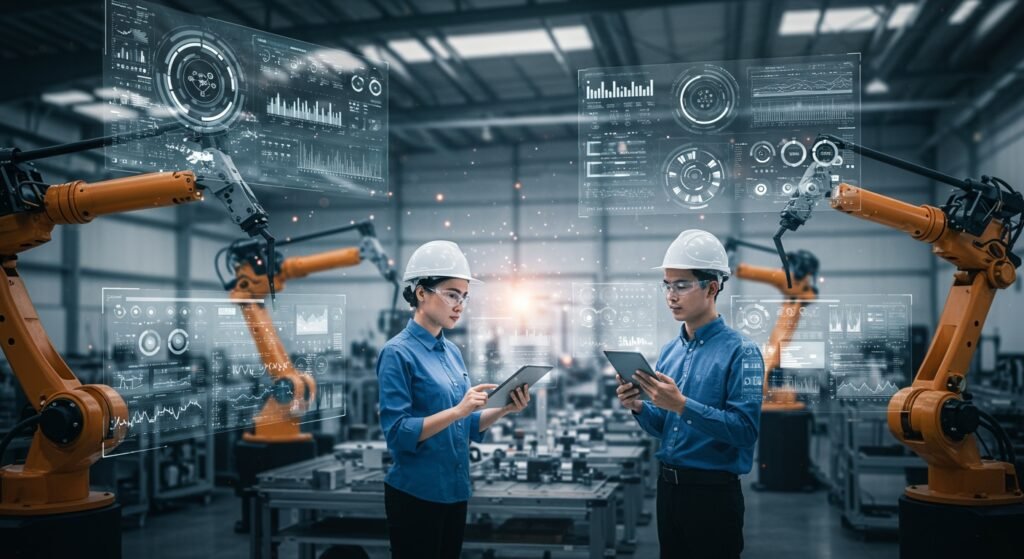
Advanced automation and robotics are integral to digital transformation, extending beyond traditional assembly lines. Collaborative robots (cobots) work alongside human employees, performing repetitive or dangerous tasks, enhancing safety, and improving precision. Automated guided vehicles (AGVs) and autonomous mobile robots (AMRs) streamline material handling and logistics within the factory, optimizing workflows and reducing manual labor requirements.
Benefits of Embracing Digital Transformation
The advantages of embarking on a digital transformation journey are multifaceted, impacting every aspect of a manufacturing business from the factory floor to the customer experience. These benefits contribute to a more resilient, efficient, and innovative operation.
| Benefit Category | Key Advantages | Impact on Business |
|---|---|---|
| Operational Efficiency | Reduced downtime, optimized resource use, streamlined workflows | Lower operating costs, higher productivity, faster time-to-market |
| Product Innovation | Faster R&D cycles, data-driven product enhancements, mass customization | Competitive edge, increased market share, customer satisfaction |
| Supply Chain Resilience | Real-time visibility, predictive logistics, agile response to disruptions | Reduced risk, improved delivery performance, cost savings |
| Enhanced Quality | Proactive defect detection, consistent product quality, less rework | Brand reputation, reduced waste, improved compliance |
| Workforce Empowerment | Safer working conditions, upskilling opportunities, better decision support | Higher employee engagement, talent retention, operational excellence |
By leveraging digital tools, manufacturers can achieve unprecedented levels of precision and control. This leads to higher quality products, reduced waste, and a more sustainable operational footprint. Furthermore, the ability to rapidly adapt to market changes and customer demands creates a significant competitive advantage.
Navigating the Challenges of Digital Implementation
While the benefits are clear, the path to digital transformation is not without its hurdles. Organizations often face challenges such as legacy infrastructure, data integration complexities, skill gaps within the workforce, and significant upfront investment costs. A robust strategy that addresses these areas is crucial. Manufacturers should also consider how optimizing supply chain logistics can be a crucial first step in their digital journey, integrating with broader transformation efforts.
The Future is Digital: Preparing for Tomorrow’s Factory
The manufacturing landscape is continually evolving, and the future is undeniably digital. Preparing for tomorrow’s factory involves not just adopting new technologies but fostering a culture of continuous innovation and adaptability. This includes investing in workforce training, developing robust data governance policies, and building partnerships with technology providers. Manufacturers who embrace this journey are not just keeping pace; they are actively shaping the future of industrial production.
In conclusion, Digital Transformation offers a compelling roadmap for manufacturers to enhance efficiency, drive innovation, and build resilience. It’s a comprehensive journey that requires strategic planning, significant investment, and a commitment to cultural change. However, the rewards—increased competitiveness, improved profitability, and a sustainable future—make it an endeavor well worth undertaking. Embrace the digital age to unlock your manufacturing potential.