The healthcare sector, while dedicated to healing, often presents a paradox: its demanding work environments can pose significant health risks to its own workforce. Long shifts, repetitive tasks, heavy lifting, and awkward postures are common occurrences that contribute to high rates of musculoskeletal disorders (MSDs) among healthcare professionals. This is where ergonomic design steps in as a critical solution, transforming challenging workspaces into safer, more efficient, and healthier environments for everyone involved.

Table of Contents
- Introduction: The Imperative of Ergonomic Design
- What Exactly is Ergonomic Design?
- Why Ergonomics is Crucial for Healthcare
- Key Principles of Ergonomic Design in Healthcare Workplaces
- Benefits of Implementing Ergonomic Solutions
- Examples of Ergonomic Solutions in Practice
- Addressing Challenges in Implementation
- Conclusion: A Healthier Future Through Design
What Exactly is Ergonomic Design?
Ergonomics is the scientific discipline concerned with understanding interactions among humans and other elements of a system, and the profession that applies theory, principles, data, and methods to design in order to optimize human well-being and overall system performance. In simpler terms, it’s about designing workplaces, products, and systems so that they fit the people who use them, rather than forcing people to fit the system. This involves considering physical, cognitive, and organizational factors.
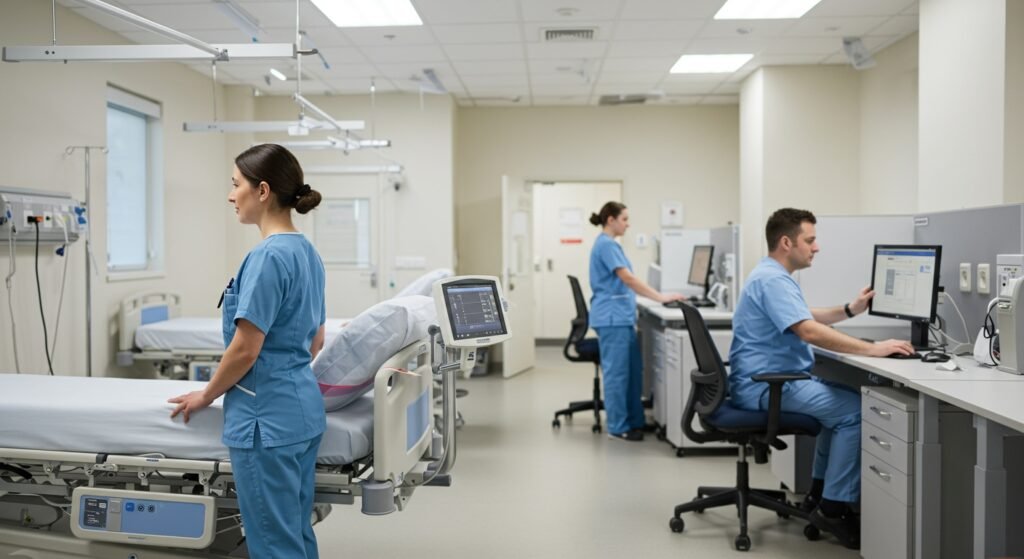
For healthcare settings, this means engineering environments, tools, and processes to minimize physical strain, reduce cognitive load, and promote efficiency. It’s not just about providing comfortable chairs; it’s a holistic approach to creating a workplace that supports the natural capabilities and limits of its users.
Why Ergonomics is Crucial for Healthcare
Healthcare professionals face unique challenges. Nurses, doctors, and support staff routinely perform tasks that involve:
- Heavy Lifting: Moving and repositioning patients, often in confined spaces.
- Prolonged Standing/Sitting: Operating rooms, laboratories, and administrative duties.
- Repetitive Motions: Administering medications, charting, performing procedures.
- Awkward Postures: Bending over patients, reaching for equipment, working in tight spaces.
These factors contribute to an alarmingly high rate of work-related injuries, particularly back and shoulder injuries. Without proper ergonomic design, these risks not only jeopardize staff health but also compromise patient care and operational effectiveness.
Key Principles of Ergonomic Design in Healthcare Workplaces
Equipment and Tool Design
The right equipment can drastically reduce physical strain. This includes:
- Patient Handling Equipment: Mechanical lifts, slide sheets, and specialized beds (e.g., height-adjustable, side-turning) minimize manual lifting.
- Adjustable Workstations: Desks and computer carts that can be raised or lowered to suit different users and tasks, allowing for both sitting and standing options.
- Ergonomic Seating: Chairs with proper lumbar support, adjustable height, and armrests for administrative and lab staff.
- Hand Tools and Instruments: Designed for comfortable grip, reduced vibration, and appropriate weight, preventing repetitive strain injuries in delicate procedures.
Workspace Layout and Accessibility
An intelligently designed physical space enhances workflow and reduces unnecessary movement and strain. Considerations include:
- Optimized Storage: Keeping frequently used items within easy reach, reducing bending and reaching.
- Clear Pathways: Ensuring ample space for maneuvering equipment and personnel, especially in patient rooms and corridors.
- Lighting and Noise Control: Adequate, glare-free lighting to reduce eye strain, and measures to minimize disruptive noise levels.
- Accessibility: Designing spaces that are easily accessible for staff of varying heights and physical abilities, as well as for patients.
Task Design and Workflow Optimization
Ergonomics extends beyond physical objects to how tasks are structured and performed. This involves:
- Minimizing Static Load: Encouraging movement and providing opportunities for micro-breaks during prolonged tasks.
- Job Rotation: Varying tasks among staff to prevent overexertion of specific muscle groups.
- Training: Educating staff on proper body mechanics, safe patient handling techniques, and how to effectively use ergonomic equipment.
- Process Streamlining: Re-evaluating workflows to eliminate redundant steps and reduce unnecessary physical demands.
Benefits of Implementing Ergonomic Solutions
Investing in ergonomic design yields a multitude of benefits, creating a ripple effect across the entire healthcare organization.
Reduced Injuries and Musculoskeletal Disorders
The most direct benefit is a significant decrease in work-related injuries, particularly MSDs like back strains, carpal tunnel syndrome, and tendonitis. This translates to fewer days lost to injury and improved long-term health for staff.
Improved Patient Safety
When staff are less fatigued and comfortable, they are better able to focus on patient care. Ergonomic patient handling equipment also reduces the risk of injury to patients during transfers and repositioning, fostering a safer environment for everyone.
Enhanced Staff Productivity and Morale
Comfortable workers are more productive. Reducing physical discomfort allows staff to concentrate better, perform tasks more efficiently, and maintain higher levels of energy throughout their shifts. This also leads to higher job satisfaction and improved morale, which are crucial for retention in a demanding field.
Significant Cost Savings
While initial investments in ergonomic equipment might seem substantial, the long-term cost savings are undeniable. These include reduced workers’ compensation claims, lower healthcare costs for injured employees, decreased absenteeism, and reduced turnover rates due to improved staff satisfaction and well-being. According to a study published in the Journal of Healthcare Engineering, facilities implementing comprehensive ergonomic programs often see a rapid return on investment through these savings.
Examples of Ergonomic Solutions in Practice
Here’s a quick overview of common ergonomic issues and their practical solutions in healthcare:
| Area of Concern | Ergonomic Solution Example | Primary Benefit |
|---|---|---|
| Patient Handling | Powered patient lifts, adjustable height beds | Reduces staff back injuries, safer patient transfers |
| Repetitive Tasks | Ergonomic hand tools, voice recognition software for charting | Minimizes hand/wrist strain, improves data entry efficiency |
| Prolonged Standing | Anti-fatigue mats, sit-stand workstations | Reduces leg/back fatigue, promotes better circulation |
| Computer Work | Adjustable monitors, ergonomic keyboards and mice | Prevents eye strain, carpal tunnel syndrome, neck pain |
| Medication Dispensing | Well-organized carts, automated dispensing cabinets | Reduces reaching/bending, improves accuracy and speed |
Addressing Challenges in Implementation
Implementing comprehensive ergonomic programs isn’t without its hurdles. Initial costs for equipment can be a concern, and there might be resistance to change from staff accustomed to traditional methods. However, these challenges can be overcome with strategic planning. Phased implementation, starting with high-risk areas, can manage budgets. Crucially, involving staff in the selection and training processes fosters buy-in and ensures solutions are practical and well-received. Demonstrating the clear return on investment (ROI) through improved safety records and productivity metrics can also secure leadership support.
Conclusion: A Healthier Future Through Design
The integration of ergonomic design principles is no longer a luxury but a necessity in modern healthcare. By proactively addressing the physical demands of healthcare work, organizations can cultivate environments that are not only safer and more comfortable for their dedicated staff but also lead to superior patient outcomes and sustainable operational efficiency. Embracing ergonomics is an investment in human capital, fostering a culture of well-being that benefits everyone from the frontline caregiver to the patient receiving care.
For more tips on general workplace safety, read our guide on Workplace Safety Essentials.
For detailed guidelines on occupational safety, refer to resources from organizations like OSHA’s Ergonomics Section.