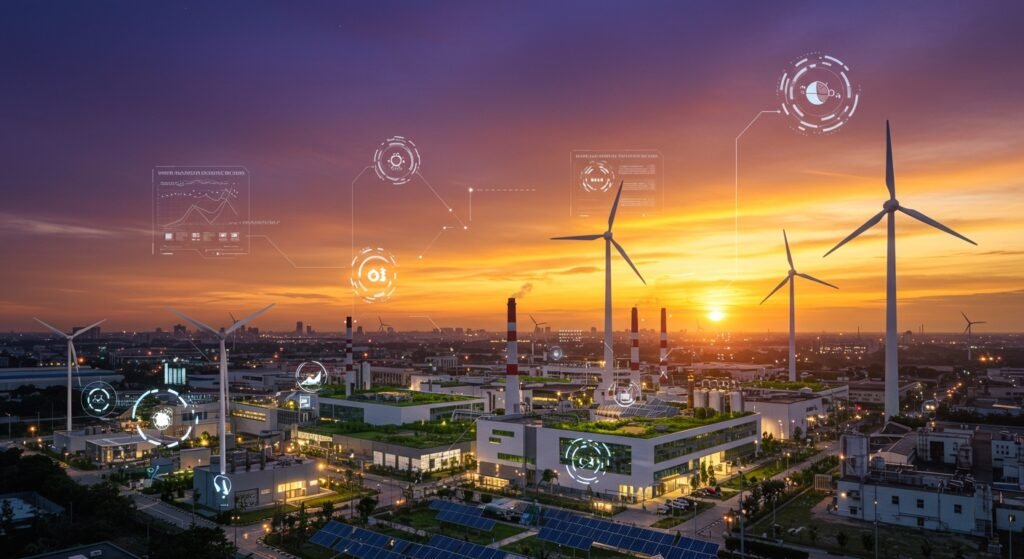
Industrial Sustainability and Achieving Efficiency
The global landscape is rapidly shifting, compelling businesses across all sectors to rethink their operational frameworks. For the industrial sector, this imperative is even more pronounced. The twin goals of sustainability and efficiency are no longer mutually exclusive; instead, they represent the cornerstone of modern, responsible, and profitable enterprise. Embracing industrial sustainability means not just complying with regulations, but actively seeking opportunities to innovate, reduce environmental impact, and optimize resource use, all while enhancing productivity and competitive advantage. This article explores the critical aspects of integrating sustainability into industrial operations to achieve unparalleled efficiency.

Table of Contents
- The Imperative for Industrial Sustainability
- Pillars of Achieving Industrial Efficiency
- Overcoming Challenges in Industrial Transformation
- The Future of Industrial Excellence
- Conclusion
The Imperative for Industrial Sustainability
For too long, industrial growth has been synonymous with resource depletion and environmental degradation. However, a paradigm shift is underway. Stakeholders, from consumers to investors, are demanding greater accountability and transparency from industrial companies. The imperative for sustainability is driven by several factors:
- Environmental Responsibility: Mitigating climate change, reducing pollution, and conserving biodiversity.
- Regulatory Compliance: Navigating increasingly stringent environmental laws and carbon taxes.
- Brand Reputation: Building trust and attracting environmentally conscious customers and talent.
- Financial Benefits: Lower operating costs, reduced waste disposal fees, and access to green financing.
Embracing sustainability is no longer an option but a strategic necessity for the modern industrial enterprise.
Pillars of Achieving Industrial Efficiency
Achieving true industrial efficiency through a sustainable lens requires a multi-faceted approach, touching every aspect of operations.
Energy Optimization
Energy consumption is often the largest operational cost and environmental footprint for industrial facilities. Optimizing energy use involves:
- Renewable Energy Integration: Investing in solar, wind, or geothermal sources.
- Energy Audits: Identifying areas of inefficiency and implementing improvements like LED lighting and efficient HVAC systems.
- Smart Energy Management Systems: Using IoT and AI to monitor and control energy usage in real-time.
Waste Reduction & Circular Economy
Moving beyond linear ‘take-make-dispose’ models, industrial operations can adopt circular economy principles:
- Lean Manufacturing: Minimizing waste at every production stage.
- Recycling & Repurposing: Establishing robust programs for materials recovery and reuse.
- By-product Synergy: Transforming waste from one process into a valuable input for another.
Sustainable Supply Chain Management
A truly sustainable industrial operation extends its vision to its entire supply chain:
- Ethical Sourcing: Partnering with suppliers who adhere to environmental and social standards.
- Local Sourcing: Reducing transportation emissions and supporting local economies.
- Transparent Logistics: Utilizing technologies to track and optimize the environmental impact of transport.
Technological Innovation
Technology is a powerful enabler for industrial sustainability and efficiency:
- Automation & Robotics: Enhancing precision, reducing material waste, and optimizing energy use.
- Artificial Intelligence & Machine Learning: Predicting maintenance needs, optimizing production schedules, and reducing energy consumption.
- Digital Twins: Simulating and optimizing complex processes virtually before physical implementation.
For more insights into technology’s role, read our article on The Future of Smart Factories.
Employee Engagement & Green Culture
A sustainable culture starts from within. Engaging employees in sustainability initiatives fosters a sense of ownership and drives innovation:
- Training Programs: Educating staff on sustainable practices and their impact.
- Incentive Schemes: Rewarding eco-friendly suggestions and behaviors.
- Leadership Buy-in: Demonstrating commitment from top management.
Below is a comparison of traditional vs. sustainable industrial practices:
| Aspect | Traditional Industrial Practice | Sustainable Industrial Practice |
|---|---|---|
| Energy Source | Fossil Fuels | Renewable Energy (Solar, Wind) |
| Waste Management | Landfilling, Incineration | Recycling, Repurposing, Circular Economy |
| Resource Use | Linear (Take-Make-Dispose) | Efficient, Closed-Loop Systems |
| Supply Chain | Cost-driven only | Ethical Sourcing, Local, Transparent |
| Environmental Impact | High Emissions, Pollution | Reduced Emissions, Clean Production |
Overcoming Challenges in Industrial Transformation
Transitioning to a sustainable and efficient industrial model is not without its hurdles. Initial investment costs, resistance to change within established organizations, and the complexity of integrating new technologies can be significant. However, the long-term benefits—including cost savings, enhanced brand value, and improved resilience—far outweigh these challenges. Strategic planning, phased implementation, and leveraging government incentives can smooth the transition. Businesses can also seek guidance from organizations like the UN Global Compact for best practices.
The Future of Industrial Excellence
The future of the industrial sector is intrinsically linked with sustainability. Companies that proactively integrate eco-friendly practices and resource efficiency into their core operations will not only survive but thrive. This holistic approach ensures not just environmental stewardship but also economic resilience, market leadership, and a positive contribution to society.
Conclusion
Achieving industrial sustainability and efficiency is a journey that demands commitment, innovation, and a forward-thinking mindset. By focusing on energy optimization, waste reduction, sustainable supply chains, technological advancement, and a green corporate culture, industrial enterprises can unlock new levels of performance and pave the way for a more sustainable future. The time to act is now, transforming challenges into opportunities for growth and a positive global impact.