PhD Research in Cyber-Physical Production Systems
Embarking on a PhD manufacturing journey offers an unparalleled opportunity to shape the future of industry. The landscape of manufacturing is rapidly evolving, driven by the integration of digital and physical worlds through Cyber-Physical Production Systems (CPPS). This article delves into the exciting avenues for doctoral research within CPPS, highlighting critical areas where innovative contributions can make a significant impact.

Cyber-Physical Production Systems represent the next generation of smart factories, where intelligent machines, sensors, and software communicate and cooperate in real-time. A PhD in this domain is not just about academic achievement; it’s about solving real-world challenges that enhance efficiency, flexibility, and sustainability in manufacturing.
Table of Contents
- What Are Cyber-Physical Production Systems?
- Why Pursue a PhD in Manufacturing with a CPPS Focus?
- Key Research Areas in CPPS for PhD Students
- Challenges and Future Opportunities
- Conclusion
What Are Cyber-Physical Production Systems?
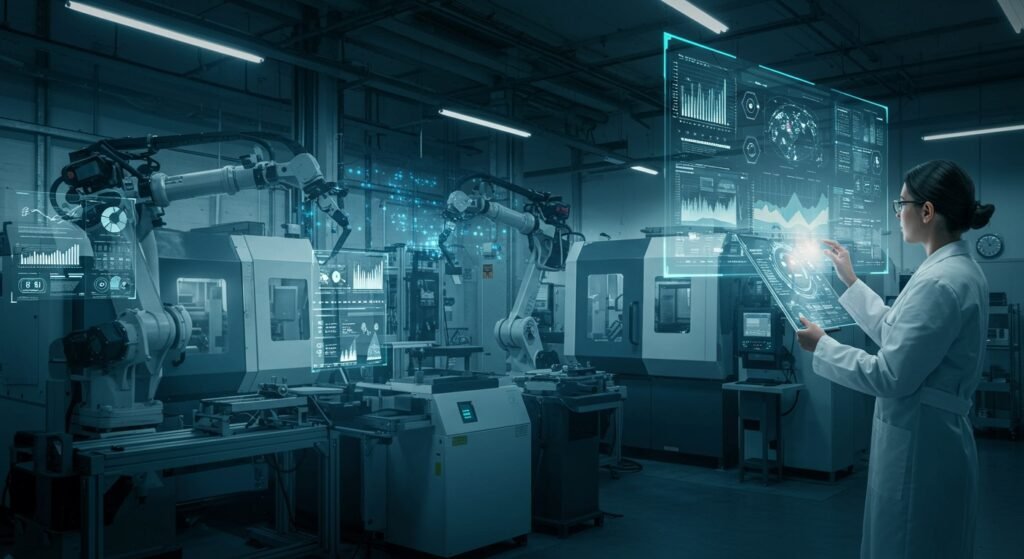
Cyber-Physical Production Systems are intricate networks that merge computational algorithms with physical components. They enable real-time data exchange, analysis, and control, leading to highly adaptable and autonomous manufacturing processes. Imagine a factory where machines can self-diagnose issues, reconfigure themselves for new products, and optimize production schedules without human intervention – this is the promise of CPPS.
Why Pursue a PhD in Manufacturing with a CPPS Focus?
A PhD manufacturing focused on CPPS is critical for several reasons. Firstly, the demand for experts capable of designing, implementing, and managing these advanced systems is rapidly increasing. Graduates with this specialization are highly sought after in academia, research institutions, and leading industrial companies. Secondly, this field offers immense scope for innovation, allowing researchers to develop cutting-edge solutions that redefine industrial paradigms. Furthermore, the interdisciplinary nature of CPPS means a PhD can involve aspects of computer science, engineering, data science, and even social sciences, providing a rich and diverse research experience.
Key Research Areas in CPPS for PhD Students
Here are some of the most promising research areas for a PhD in CPPS:
AI and Machine Learning Integration for Predictive Maintenance
One of the most impactful areas involves leveraging Artificial Intelligence (AI) and Machine Learning (ML) to enhance predictive maintenance in CPPS. PhD candidates can explore advanced algorithms for anomaly detection, fault prediction, and optimizing maintenance schedules, drastically reducing downtime and operational costs.
Digital Twin and Advanced Simulation Technologies
The development and application of digital twins for entire production lines or even full factories offer vast research opportunities. This includes creating high-fidelity models that mirror physical assets, enabling real-time monitoring, simulation of ‘what-if’ scenarios, and proactive decision-making. Researchers can focus on data synchronization, model validation, and the integration of various simulation tools.
Human-Robot Collaboration (HRC) and Ergonomics
As automation advances, the interaction between humans and robots becomes increasingly important. Research in HRC focuses on designing safe, efficient, and intuitive collaborative workspaces. This area might involve developing adaptive robot control systems, enhancing human-robot communication, or studying the psychological and ergonomic factors influencing human operators. For more insights into smart factory advancements, check out IndustryWeek’s Smart Factory Insights.
Data Security and Privacy in Smart Factories
With an increasing amount of data being collected and exchanged in CPPS, cybersecurity becomes paramount. PhD research can explore novel encryption techniques, secure data sharing protocols, blockchain applications for supply chain integrity, and intrusion detection systems tailored for industrial control networks. The goal is to protect sensitive manufacturing data from cyber threats.
Comparative Overview of CPPS Research Areas
| Research Area | Primary Focus | Key Technologies | Potential Impact |
|---|---|---|---|
| AI/ML in Maintenance | Predictive fault detection, optimal maintenance schedules | Neural Networks, Reinforcement Learning, Sensor Fusion | Reduced downtime, cost savings, increased productivity |
| Digital Twin & Simulation | Real-time monitoring, virtual prototyping, scenario testing | IoT, Cloud Computing, High-Performance Simulation | Faster product development, optimized processes, risk mitigation |
| Human-Robot Collaboration | Safe & efficient human-robot interaction, ergonomic design | Robotics, Computer Vision, Haptic Feedback Systems | Improved safety, increased flexibility, enhanced productivity |
| Data Security & Privacy | Protecting industrial data from cyber threats | Blockchain, Encryption, Intrusion Detection Systems | Data integrity, operational resilience, regulatory compliance |
Challenges and Future Opportunities
While the opportunities are vast, CPPS research also presents challenges, including system complexity, data management, interoperability issues, and the need for skilled personnel. A PhD researcher can contribute to overcoming these by developing standardized architectures, innovative data analytics platforms, and user-friendly interfaces. The future will see CPPS becoming even more autonomous, interconnected, and adaptive, necessitating continuous research in areas like edge computing, quantum machine learning, and sustainable manufacturing practices within these intelligent systems. Our blog on Advanced Robotics in Manufacturing offers more context.
Conclusion
A PhD manufacturing in Cyber-Physical Production Systems is a pathway to becoming a leader in the Fourth Industrial Revolution. The interdisciplinary nature and profound impact of this field offer an enriching academic experience and a highly rewarding career. By focusing on areas such as AI integration, digital twins, human-robot collaboration, or cybersecurity, doctoral candidates can make indispensable contributions to the smart factories of tomorrow, pushing the boundaries of what’s possible in advanced automation and industrial efficiency.