In the rapidly evolving landscape of modern industry, the integration of robotics and artificial intelligence (AI) is transforming manufacturing, logistics, and countless other sectors. While these advancements bring unparalleled efficiency and productivity, they also usher in new challenges, particularly concerning workplace safety. Ensuring robust robotics safety is paramount to protecting human workers and valuable assets. This article delves into how AI integration is not just enhancing, but redefining safety protocols, creating significantly safer industrial workplaces.

Table of Contents
- Introduction
- The Evolution of Industrial Safety
- How AI Enhances Robotics Safety: A New Era
- Key Technologies Driving Safer Workplaces
- Benefits Beyond Compliance
- Challenges and Future Outlook
- Conclusion
The Evolution of Industrial Safety
Historically, industrial safety relied heavily on physical barriers, manual inspections, and rigid operational procedures. While effective to a degree, these methods often led to bottlenecks, reduced flexibility, and could not account for unforeseen circumstances or complex human-machine interactions. The advent of traditional industrial robots brought increased automation but also necessitated strict separation from human workers due to their power and speed, creating ‘caged’ work cells.
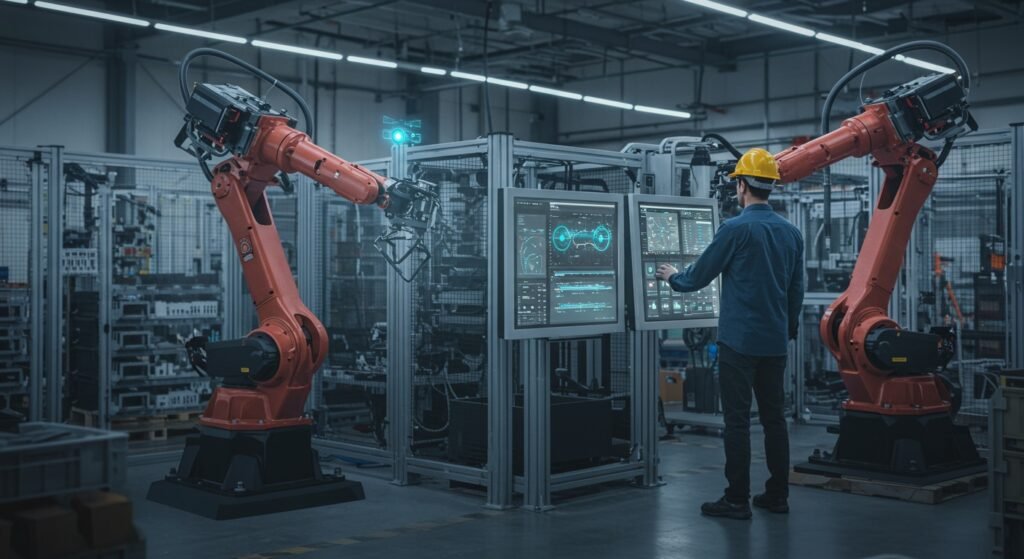
However, the new wave of collaborative robots (cobots) and AI-driven systems promises a future where humans and machines can work side-by-side, safely and efficiently. This paradigm shift requires a sophisticated approach to safety, one that can adapt, learn, and predict, moving beyond reactive measures to proactive prevention.
How AI Enhances Robotics Safety: A New Era
AI’s analytical prowess and ability to process vast amounts of data in real-time make it an indispensable tool for elevating robotics safety. Here are several key ways AI is making industrial workplaces safer:
Predictive Maintenance and Anomaly Detection
AI algorithms can analyze sensor data from robots and machinery to predict equipment failures before they occur. By identifying subtle anomalies in performance, temperature, vibration, or power consumption, AI enables preventative maintenance, reducing the likelihood of unexpected malfunctions that could lead to accidents. This proactive approach minimizes downtime and, more importantly, prevents dangerous situations.
Real-time Hazard Identification and Avoidance
Advanced vision systems and deep learning algorithms allow robots to perceive their environment with unprecedented accuracy. AI-powered robots can identify human presence, detect foreign objects, or recognize unsafe conditions in real-time. If a human enters a restricted zone or an unexpected obstruction appears, the AI system can instantly slow down, stop, or reroute the robot, preventing collisions and injuries. This is crucial for human-robot collaboration (HRC).
Adaptive Safety Protocols
Unlike static safety systems, AI can learn and adapt. As operating conditions change, or as new scenarios emerge, AI can refine its safety protocols, optimizing robot behavior for maximum safety without sacrificing efficiency. This means safety systems become more intelligent and effective over time, responding dynamically to the complexities of a modern factory floor.
Key Technologies Driving Safer Workplaces
The synergy of several cutting-edge technologies empowers AI-driven robotics safety:
- Smart Sensors and Vision Systems: High-resolution cameras, LiDAR, radar, and ultrasonic sensors feed environmental data to AI systems, enabling comprehensive situational awareness.
- Machine Learning for Risk Assessment: ML models analyze historical accident data and real-time operational data to identify patterns and predict potential risks, allowing for targeted interventions.
- Autonomous Navigation and Path Planning: AI-powered navigation systems allow mobile robots to safely traverse complex environments, avoiding obstacles and dynamically adjusting routes to prevent collisions with humans or other machines.
- Force and Torque Sensors: Integrated into cobots, these sensors enable robots to detect unexpected contact and instantly reduce force or stop, making direct human interaction safe.
For more insights into industrial automation, visit the Robotics Industries Association.
Comparative Overview: Traditional vs. AI-Enhanced Safety
| Feature | Traditional Safety | AI-Enhanced Safety |
|---|---|---|
| Risk Detection | Manual checks, fixed sensors | Real-time anomaly detection, predictive analytics |
| Response Time | Human-dependent, delayed | Automated, instantaneous |
| Adaptability | Static protocols | Dynamic, learning algorithms |
| Human-Robot Interaction | Guarded separation | Collaborative, context-aware |
Benefits Beyond Compliance
The advantages of AI integration for robotics safety extend far beyond mere regulatory compliance. Companies adopting these advanced systems often experience:
- Reduced Accidents and Injuries: The most significant benefit is a dramatic decrease in workplace incidents, leading to fewer injuries and fatalities.
- Increased Productivity: By fostering a safer environment, human workers can collaborate more confidently and efficiently with robots, reducing fear and hesitation.
- Improved Worker Morale: Employees feel more secure knowing that advanced systems are in place to protect them, leading to higher job satisfaction and engagement.
- Lower Insurance Costs: A demonstrably safer workplace can result in reduced insurance premiums and fewer legal liabilities.
This advanced approach complements strategies discussed in our previous article on The Future of Smart Factories, showcasing how integrated technologies drive holistic improvements.
Challenges and Future Outlook
Despite the immense promise, integrating AI for robotics safety isn’t without its challenges. Data privacy, algorithm bias, the complexity of system integration, and the need for skilled personnel to manage these advanced systems are significant hurdles. However, ongoing research and development are continually addressing these issues.
The future of industrial safety lies in increasingly autonomous and intelligent systems. We can anticipate even more sophisticated AI models capable of complex decision-making, natural language processing for human-robot communication, and a heightened ability to anticipate human intent, making industrial environments not just safe, but inherently intelligent and responsive to every nuance of human-robot interaction.
Conclusion
The integration of AI into robotics is fundamentally reshaping industrial workplaces for the better, particularly in the realm of safety. By moving from reactive measures to proactive, predictive, and adaptive safety protocols, industries can significantly mitigate risks, protect their workforce, and unlock new levels of efficiency. As technology continues to advance, the symbiotic relationship between AI and robotics will solidify, creating a future where industrial environments are not only productive but also epitomes of robotics safety and innovation.