In an era defined by rapid technological advancement and unprecedented global connectivity, The traditional boundaries of industrial work are dissolving. The concept of remote work, once largely confined to office-based roles, is now profoundly reshaping sectors that have historically relied on physical presence: manufacturing, energy, and logistics. This transformative shift, often accelerated by unforeseen global events, is not merely a temporary adjustment but a fundamental redefinition of industrial operations. Understanding The trajectory of this evolution is crucial for businesses aiming to remain competitive and innovative in a progressively digital world. This article delves into the core aspects of how remote capabilities are being integrated into industrial environments, exploring the technologies enabling this change, the benefits it offers, and the challenges that must be navigated to secure a prosperous future.
Table of Contents
- The Evolving Landscape of Industrial Operations
- Key Technologies Shaping The Future
- Benefits and Challenges
- Real-World Applications and Case Studies
- The Road Ahead: Preparing for What’s Next
The Evolving Landscape of Industrial Operations
The industrial sector, long characterized by on-site production, assembly lines, and hands-on maintenance, is experiencing a profound paradigm shift. Driven by Industry 4.0 principles, digital transformation, and a globalized workforce, operations are becoming increasingly distributed. This evolution is enabling tasks that once required physical proximity to be performed, monitored, or even automated from virtually any location. The very nature of how factories are run, how equipment is serviced, and how global supply chains are managed is being reimagined.
Driving Forces Behind Remote Industrial Work
Several key factors are propelling this transformation. The demand for greater efficiency, reduced operational costs, and enhanced safety for workers are paramount. Furthermore, the ability to tap into a global talent pool, transcending geographical limitations, offers a significant competitive advantage. Environmental considerations also play a role, as remote operations can potentially reduce travel and associated carbon footprints. These forces collectively underscore why adapting to a remote-friendly industrial model is not just an option, but a strategic imperative for long-term success.
Key Technologies Shaping The Future

The shift towards remote industrial work would be impossible without a suite of cutting-edge technologies. These innovations provide the necessary infrastructure for real-time data exchange, remote control, and immersive collaboration, fundamentally altering how industrial tasks are performed and managed. Understanding The role of each technology is vital for implementing effective remote strategies.
Augmented Reality and Virtual Reality
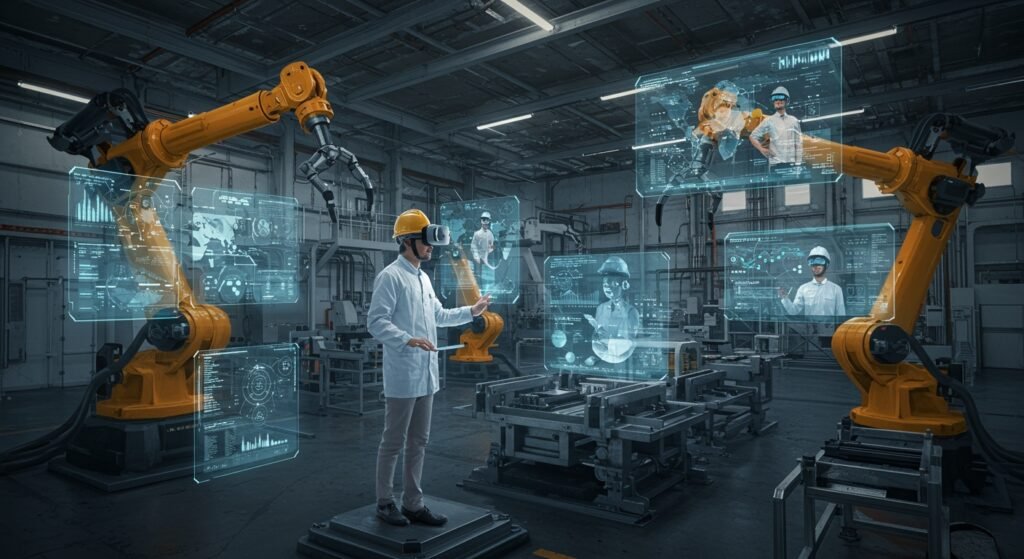
AR and VR are revolutionizing remote maintenance, training, and collaboration. Technicians in the field can receive real-time guidance from experts located thousands of miles away, projected directly onto their view of the equipment. This minimizes downtime, reduces travel costs, and enhances the precision of complex repairs. For training, VR simulations offer immersive, risk-free environments for new employees to practice intricate procedures.
Robotics and Automation
Automated systems and robots are the backbone of many remote industrial operations. From autonomous guided vehicles (AGVs) transporting materials to robotic arms performing precision manufacturing, these technologies allow factories to operate with minimal human presence on the shop floor. Remote human oversight and programming become the primary interaction points, shifting roles from manual labor to supervisory and analytical tasks.
IoT and Data Analytics
The Internet of Things (IoT) provides the sensory nervous system for remote industrial environments. Sensors embedded in machinery collect vast amounts of data on performance, temperature, vibration, and more. This data, when processed through advanced analytics platforms, enables predictive maintenance, optimized resource allocation, and real-time operational adjustments, all of which can be managed and monitored remotely. For a deeper dive into how AI is transforming this space, read our article on AI in Manufacturing.
Benefits and Challenges
Embracing remote industrial work offers substantial advantages but also presents unique hurdles that must be strategically addressed.
Advantages of Remote Industrial Models
- Increased Efficiency: Remote monitoring and control can lead to optimized processes and reduced operational downtime.
- Cost Reduction: Lower travel expenses, reduced need for large on-site staff, and optimized energy consumption contribute to significant savings.
- Enhanced Safety: Removing personnel from hazardous environments improves workplace safety.
- Global Talent Pool: Access to specialized expertise regardless of geographical location.
- Business Continuity: Greater resilience against disruptions that might otherwise halt on-site operations.
Overcoming The Obstacles
Despite the advantages, implementing remote industrial solutions is not without its challenges. Cybersecurity is a paramount concern, as remote access points create new vulnerabilities. The need for robust, high-speed connectivity in often isolated industrial settings can also be an issue. Furthermore, adapting organizational culture and ensuring effective communication and team cohesion among a distributed workforce requires careful planning and investment in new management strategies. Addressing The human element, including training and upskilling, is critical for successful adoption.
Real-World Applications and Case Studies
The concepts of remote industrial work are already being applied across various sectors, demonstrating tangible benefits. From remote control rooms managing oil and gas pipelines to virtual commissioning of new manufacturing lines, the possibilities are expanding.
| Industry Sector | Remote Application Example | Key Benefit |
|---|---|---|
| Energy | Remote monitoring and control of offshore oil rigs | Increased safety, reduced operational costs |
| Manufacturing | Virtual commissioning and predictive maintenance of factory robots | Faster deployment, minimized downtime |
| Logistics | Remote operation of autonomous warehouse vehicles | Improved efficiency, reduced labor costs |
| Mining | Tele-remote operation of heavy excavation equipment | Enhanced safety, continuous operation |
The Road Ahead: Preparing for What’s Next
The future of remote industrial work is not just about adopting new technologies; it’s about fundamentally rethinking organizational structures, employee skill sets, and operational philosophies. Companies that invest in robust digital infrastructure, prioritize cybersecurity, and foster a culture of adaptability will be best positioned to thrive. Continuous training and upskilling of the workforce in digital literacy and remote collaboration tools will be essential. This isn’t merely a technological shift; it’s a strategic evolution towards a more flexible, resilient, and globally integrated industrial ecosystem. For more insights into how companies are navigating this future, explore reports from leading consultancies like Accenture on Industry X.0, which often highlight the latest trends and best practices in industrial digital transformation.