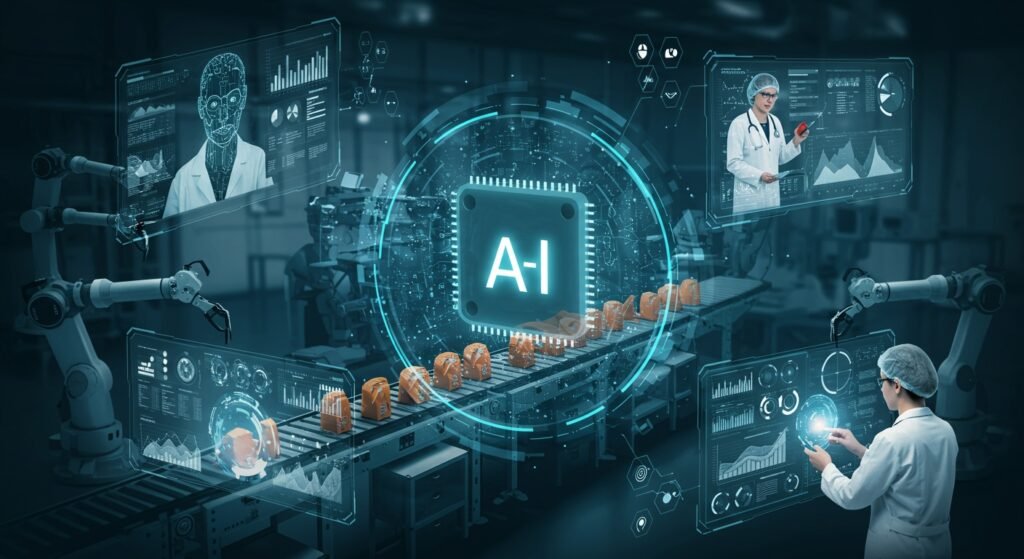
The landscape of quality improvement is undergoing a profound transformation, spearheaded by the rapid advancements in Artificial Intelligence (AI). Once confined to theoretical discussions, AI is now a tangible force, reshaping how organizations across diverse sectors approach product excellence, service delivery, and operational efficiency. From predictive analytics preventing failures before they occur to automated systems ensuring consistent product standards, artificial intelligence offers unprecedented capabilities to elevate quality across the board. Understanding the nuanced ways AI contributes to quality is crucial for any business aiming to stay competitive and customer-centric in the modern era. This article delves into the core aspects of AI’s influence, illustrating how it is not just an add-on, but a fundamental driver of superior quality outcomes.
Contents
- The Dawn of AI in Quality Improvement
- Key Areas of Impact
- Implementing AI for Quality
- Challenges and Future Outlook
- Conclusion
The Dawn of AI in Quality Improvement
Historically, quality improvement methodologies, from Total Quality Management (TQM) to Six Sigma, have relied heavily on statistical analysis and human expertise. While effective, these approaches often faced limitations in processing vast quantities of data, identifying subtle patterns, or reacting in real-time to emerging issues. The rise of big data and advanced computing has set the stage for a new paradigm, where AI takes center stage.
Historical Context of Quality
For decades, quality assurance was a reactive process, focusing on identifying defects after production. Later, proactive methods emerged, emphasizing process control and defect prevention. However, even with sophisticated statistical process control (SPC) charts, human analysts could only process so much information. The complexity of modern manufacturing and service delivery often outstripped these traditional capabilities, creating a demand for more intelligent and automated solutions.
Why AI is a Game-Changer
Artificial Intelligence, particularly machine learning, offers capabilities that transcend traditional methods. It can ingest and analyze enormous datasets from diverse sources – sensor data, customer feedback, operational logs, and supply chain information – to uncover correlations and predict outcomes with remarkable accuracy. This predictive power allows organizations to shift from reactive problem-solving to proactive prevention, identifying potential quality issues long before they manifest. Furthermore, AI systems can learn and adapt, continuously improving their performance over time, making them invaluable assets in dynamic environments.

Key Areas of Impact
The application of AI in quality improvement is multifaceted, touching upon almost every stage of a product’s lifecycle or a service’s delivery. Each area benefits from AI’s ability to process data, detect anomalies, and optimize processes beyond human capacity.
Predictive Maintenance and Anomaly Detection
In manufacturing and heavy industry, AI-powered predictive maintenance models analyze sensor data from machinery to forecast potential equipment failures. By identifying anomalies and degradation patterns, maintenance can be scheduled precisely when needed, preventing costly breakdowns and ensuring consistent production quality. This not only reduces downtime but also maintains product specifications, preventing defects that arise from faulty machinery.
Enhanced Data Analysis and Insights
AI algorithms can sift through vast quantities of data from production lines, customer interactions, and supply chains to identify root causes of quality issues that might be invisible to human analysis. For instance, in healthcare, AI can analyze patient records and treatment outcomes to identify best practices and improve patient care quality. The insights gained help organizations optimize processes, reduce waste, and improve overall product or service integrity.
Automation of Quality Control Processes
Computer vision systems, a subset of AI, are revolutionizing visual inspection processes. These systems can automatically detect microscopic flaws in products, verify assembly accuracy, and ensure consistency at speeds and accuracies impossible for human inspectors. This leads to higher product reliability and significantly reduces the recall rate, enhancing customer satisfaction and brand reputation.
Personalized Quality in Service Industries
In service sectors like finance and customer support, AI analyzes individual customer preferences and interaction histories to provide tailored services. Chatbots and virtual assistants powered by natural language processing (NLP) can offer consistent, high-quality support, while AI-driven recommendation engines personalize experiences, leading to higher customer satisfaction and perceived service quality. The ability of AI to adapt and personalize makes it a potent tool for refining customer experience.
Implementing AI for Quality
Integrating AI into existing quality frameworks requires a strategic approach. It involves identifying specific pain points, gathering relevant data, and deploying appropriate AI models. Organizations must also focus on training their workforce to collaborate effectively with AI systems, transitioning from traditional roles to ones focused on data interpretation and strategic oversight. The table below illustrates some common AI applications and their benefits to quality improvement:
| AI Application | Benefit to Quality Improvement | Example Industry |
|---|---|---|
| Predictive Analytics | Reduces downtime, prevents defects | Manufacturing, Logistics |
| Computer Vision | Automated defect detection, consistency | Automotive, Electronics |
| Natural Language Processing | Customer feedback analysis, service enhancement | Customer Service, Healthcare |
| Machine Learning Algorithms | Optimized processes, personalized experiences | Retail, Finance |
To maximize the benefits, companies should start with pilot projects, measure the impact, and then scale successful implementations. This approach complements strategies discussed in our previous article on Leveraging Data for Operational Excellence. Furthermore, ethical considerations regarding AI’s use and data privacy are paramount to maintaining trust and ensuring responsible deployment. For more insights into AI’s broader applications, you might visit IBM Watson AI Ethics.
Challenges and Future Outlook
Despite its immense potential, the journey to fully integrate AI into quality improvement is not without challenges. These include the need for high-quality data, the complexity of AI model development and deployment, and the significant initial investment in technology and expertise. However, the benefits often far outweigh these hurdles.
Overcoming Implementation Hurdles
Organizations must address data governance issues, ensure data cleanliness, and develop robust infrastructure to support AI operations. Investing in skilled data scientists and AI engineers, or partnering with specialized firms, can help bridge the expertise gap. Phased implementation and continuous monitoring are key to successful adoption.
The Continuous Evolution of AI and Quality
The field of AI is constantly evolving, with new algorithms and capabilities emerging regularly. This continuous evolution means that quality improvement strategies will also need to adapt. Staying abreast of these advancements, fostering a culture of innovation, and integrating AI as a core component of quality management will be critical for sustained success in the years to come.
Conclusion
The impact of AI on quality improvement is undeniably transformative. By enabling predictive insights, automating complex inspections, and personalizing service delivery, AI empowers organizations to achieve unprecedented levels of excellence. While challenges exist, the strategic adoption of AI offers a clear path to superior product and service quality, reduced operational costs, and enhanced customer satisfaction. Embracing AI is not just about adopting new technology; it’s about fundamentally rethinking and elevating the pursuit of quality in every facet of business.